How long is Robotic Gallbladder Surgery?

When someone hears the word surgery, a few things immediately flash in their mind — long hours under anesthesia, a big hospital stay, and weeks of painful recovery. But in the world of modern medicine, especially with robotic techniques, that picture is changing fast.

One of the most commonly performed robotic procedures today is gallbladder removal, also called cholecystectomy. Thanks to robotic technology, what used to take hours and leave behind large scars can now be done in under an hour with minimal cuts, faster healing, and barely any hospital stay.

This blog will walk you through everything you need to know about how long is robotic gallbladder surgery— not just how long it takes inside the OT, but how long the entire experience lasts, from preparation to recovery.

What is Robotic Gallbladder Surgery?

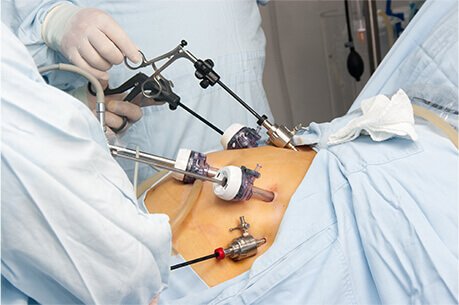
Robotic gallbladder surgery is an advanced, minimally invasive procedure in which the surgeon removes your gallbladder using robotic arms controlled by a high-tech console. It’s not the robot thinking — it’s your surgeon, who sits a few feet away and uses tiny hand movements to control robotic instruments inside your body.

Here’s how it works:

  • Small cuts (usually 4) are made on your abdomen.
  • A tiny camera is inserted through one of the incisions, sending high-definition 3D images to a monitor.
  • The surgeon, seated at a console, controls robotic instruments that mimic wrist movements, with even greater precision and flexibility.
  • The gallbladder is separated from surrounding structures and removed through one of the incisions.

How Long is Robotic Gallbladder Surgery?

Generally, robotic gallbladder surgery takes about 45 minutes to 1.5 hours. The exact time depends on several factors:

  1. Condition of the Gallbladder: If your gallbladder is inflamed, infected, or full of stones, it may take more time to remove carefully without damaging nearby organs.
  2. Surgeon’s Experience: An experienced Robotic Surgeon in Delhi can complete the surgery more efficiently, even in complicated cases, thanks to their familiarity with robotic controls and the patient’s anatomy.
  3. Obesity or Prior Abdominal Surgeries: In overweight patients or those who’ve had previous operations, it may take longer to navigate internal organs and scar tissue.
  4. Anesthesia and Setup Time: The robot must be docked, surgical ports must be inserted, and the patient must be fully prepped — this adds around 20–30 minutes before and after the actual cutting begins.
  5. Unexpected Findings During Surgery: Occasionally, surgeons discover issues (like a bile duct anomaly or adhesions) that require extra care, and thus, more time.

Still, even at the higher end, the procedure is faster than traditional open surgery, which may take over 2–3 hours and requires a larger incision.

So when someone asks, “How long is robotic gallbladder surgery?”, a more accurate reply would be: “The surgery itself takes around an hour, but the full operating room time may be up to 2 hours, including preparation and recovery from anesthesia.”

How long is the Hospital stay after Robotic Surgery?

Gone are the days when gallbladder removal meant a week-long stay in a hospital bed with a dressing as wide as a belt. With robotic technology, most patients go home the same day or within 24 hours after surgery.

Let’s break it down:

  • Same-Day Discharge (Daycare Surgery): If you’re medically fit, have no complications, and your pain is controlled, doctors may discharge you a few hours after surgery. This is becoming common in many advanced centers offering Gallbladder Surgery in Delhi.
  • One-Night Hospital Stay: Some patients are kept under observation overnight, especially older adults, diabetics, or those who live far from the hospital.
  • More than 1 Night: Rare, and usually only if there are complications like bleeding, bile leak, or unexpected findings during surgery.

Before discharge, your doctor checks for:

  • Stable blood pressure and oxygen levels
  • Ability to walk and pass urine
  • No excessive pain or vomiting
  • Tolerating light food or liquids

In comparison, traditional open surgery often needs a 3–5 day hospital stay. So yes, robotic gallbladder surgery truly shortens your stay — and speeds up your return to normal life.

Recovery Time after Robotic Gallbladder Surgery

When you hear the word “surgery,” most people immediately imagine a long, slow recovery — lots of bed rest, tight bandages, and painkillers on repeat. But here’s the beauty of robotic gallbladder surgery: the recovery is much faster and smoother than traditional methods.

So, how long does it take to fully recover?

Most patients feel 70–80% recovered within 1 week, and completely back to normal within 2 to 3 weeks.

Here’s a general timeline of what recovery looks like:

  • Day 1–2: Mild pain or discomfort around the incision sites. Walking is encouraged, but strenuous movement is avoided. You can usually drink liquids and eat light food.
  • Days 3–5: Pain reduces significantly. Bowel movements may return to normal. You can resume basic household activities slowly.
  • Days 7–10: Stitches (if any) are removed, and most people feel confident walking, sitting, and eating normally. Pain medication is rarely needed beyond this point.
  • Weeks 2–3: You’re likely fully mobile, doing most of your daily tasks independently, including light office work or driving (after medical approval).

Compare this to open gallbladder surgery, where recovery takes 6–8 weeks, and the difference is clear.

Choosing Dr. Atul Peters not only makes the surgery safer but also often ensures a faster recovery timeline, as the surgical technique involves minimal tissue damage and less inflammation.

How soon Can You Resume Daily Activities and Work?

You’ve made it through surgery, you’re walking around again, and your appetite is returning. But when can you get back to life, work, exercise, travel, or just picking up the grocery bag?

Let’s answer this honestly, without the sugarcoating.

Activities You Can Resume Early (within 3–5 days):

  • Walking indoors or in your building
  • Climbing stairs slowly
  • Reading, working on a laptop, and light cooking
  • Taking a shower (after dressings are removed)

Activities You Can Resume in 1–2 Weeks:

  • Driving a car (if you’re not on painkillers and can move comfortably)
  • Returning to desk jobs or work-from-home setups
  • Going for light walks outdoors

Activities That Need to Wait (at least 3–4 weeks):

  • Lifting heavy weights (gym or groceries)
  • Bending or stretching exercises
  • Travel involving long hours
  • Any high-intensity physical activity

Your doctor will guide you based on how your healing is progressing. But most people who undergo Gallbladder Surgery in Delhi via robotic technique can return to office work in about 7–10 days, much faster than with open surgery.

Why Robotic Gallbladder Surgery is Faster than Traditional Surgery

If you’re wondering why robotic surgery is so efficient compared to open or even standard laparoscopic methods, the answer lies in precision, control, and minimal trauma.

Here’s how robotic technology saves time and speeds up healing:

  1. Smaller Incisions: Robotic instruments require tiny cuts (often 5–10 mm), unlike open surgery, which needs a large abdominal incision. Smaller cuts = less pain, less healing time.
  2. High-Definition 3D Imaging: The robotic system provides magnified 3D visuals. Surgeons can see the anatomy more clearly, reducing the risk of injury and shortening the time taken to identify and remove the gallbladder.
  3. Tremor-Free, Precise Movements: Even the steadiest human hand has minor tremors. Robots filter this out completely, enabling highly controlled, refined movements during the procedure.
  4. Minimal Bleeding: The fine movements of robotic tools cause less damage to surrounding tissues and blood vessels, which means less blood loss and quicker post-op recovery.
  5. Shorter Hospital Stay and Recovery: Because of all the above, robotic surgery patients often return home the same day and recover in a fraction of the time it takes with open surgery.

In short, robotic gallbladder surgery is not just about being “fancy” — it’s clinically superior in many ways.

Robotic Gallbladder Surgery by Dr. Atul Peters!
Contact Now!

Book Your Appointment


Conclusion

Gone are the days when surgery meant long hospital stays, large scars, and weeks of painful recovery. With robotic gallbladder surgery, patients today are choosing precision, speed, and comfort.

From the time in the OT to the hours spent in the hospital, everything about robotic surgery is designed to be efficient. In the hands of an expert Robotic Surgeon in Delhi, what was once considered a major operation can now be a minimally invasive, low-stress procedure with excellent results.

So if you’ve been diagnosed with gallstones or chronic gallbladder issues, and you’re wondering about how long robotic gallbladder surgery takes, the answer is simple: not long at all — but the benefits last a lifetime.

Frequently Asked Questions

Q1. How long does robotic gallbladder surgery take inside the OT?
Usually 45 minutes to 1.5 hours, depending on the complexity of the case.

Q2. How long do I have to stay in the hospital?
Most patients are discharged the same day or within 24 hours.

Q3. When can I return to work?
If you have a desk job, most people return to work within 7–10 days. For physical jobs, 3–4 weeks.

Q4. Is robotic surgery better than laparoscopic surgery?
Yes, in many cases. It offers better precision, faster healing, and less blood loss.

Q5. Does robotic surgery cost more?
It can be slightly more expensive, but many believe the faster recovery and fewer complications make it worth the cost.
Delhi’s Top Robotic Surgeon for Weight Loss Surgery

In the heart of India’s bustling capital, Delhi, a revolution in weight loss surgery is underway. Robotic surgery, once a futuristic concept, has become a reality, offering patients a more precise and minimally invasive approach to achieving their weight loss goals.

When envisioning surgical options, the traditional image of a large incision and handheld instruments might come to mind. However, in recent decades, the field has dramatically evolved with the advent of minimal access surgery. This innovative approach, which requires only a few tiny incisions, has largely supplanted the more invasive open procedures. Among these advancements are laparoscopic surgeries, which utilize a telescope and specialized instruments, and, more recently, the sophisticated world of robotic-assisted surgery.

What is Robotic surgery?

Robotic surgery, often referred to as robot-assisted surgery, merges cutting-edge robotic precision with the skilled touch of human surgeons, resulting in markedly improved patient outcomes. This advanced technique, which has been gaining momentum since its inception around 20 years ago, has seen an exponential rise in adoption among surgeons and hospitals alike.

The origins of robotic surgery trace back to the 1980s when the pioneering PUMA 560 robotic system made its debut in neurosurgical biopsies. However, it was the introduction of the Da Vinci Surgical System by Intuitive Surgical that truly revolutionized minimally invasive surgery. This state-of-the-art robotic platform offers unparalleled dexterity, precision, and 3D visualization, transforming the landscape of surgical procedures.

Today, virtually all surgeries that were once performed via laparoscopy can now be executed with even greater accuracy through robotic assistance. As the popularity of robotic surgery continues to soar, it’s crucial to choose the best robotic surgeon in Delhi for your weight loss journey.

Why consider robotic surgery for weight loss?

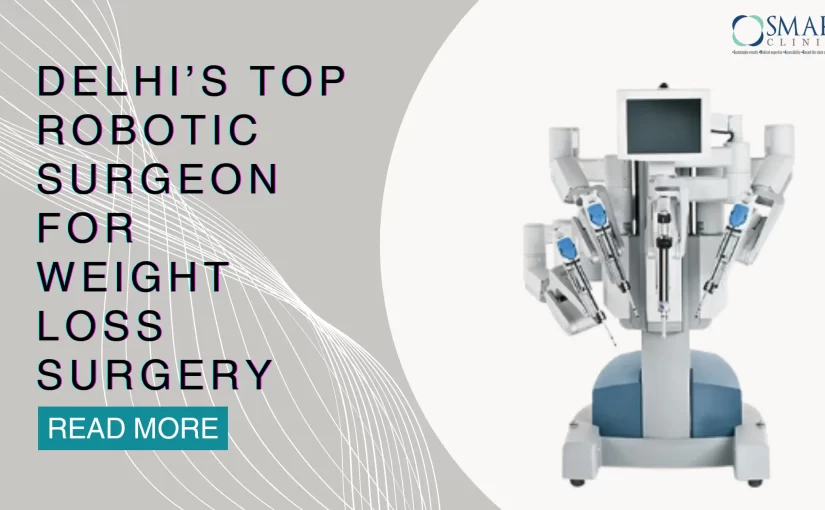
Robotic surgery systems consist of a console where the surgeon sits, a robotic arm system equipped with surgical instruments, and a high-definition 3D camera. The surgeon controls the robotic arms using hand and foot controls at the console, translating their movements into precise actions by the robotic system. The advanced technologies allow surgeons to perform intricate procedures with greater control and accuracy.

Advantages of Robotic Bariatric Surgery for Weight Loss

Robotic weight loss surgery, also known as robotic bariatric surgery, offers several advantages over traditional open surgery. These include:

Smaller incisions

Robotic surgery often requires smaller incisions, leading to reduced pain, minimal scarring, and a quicker recovery. This advanced surgical approach enables surgeons to carry out complex procedures with precision, allowing you to return to your daily activities sooner compared to traditional major surgery.

Enhanced precision

The robotic surgical system enhances precision and control during procedures, significantly minimizing the risk of complications and improving overall surgical outcomes. By offering detailed, high-definition visualization and allowing for finely tuned, dexterous movements, the robotic technology enables surgeons to perform complex maneuvers with greater accuracy. This heightened precision reduces the likelihood of inadvertent damage to surrounding tissues and structures, leading to fewer postoperative issues and a higher success rate.

3-D Visualization

The remarkable advantages of robotic surgery stem from its cutting-edge 3D visualization and the versatile movement of its robotic arms. These arms can rotate a full 360 degrees, offering a magnified, three-dimensional view of the surgical area. This enhanced perspective allows for meticulous tissue dissection and precise control over bleeding. The robotic arms can maneuver into tricky spots that might be challenging for a surgeon’s hands to reach, all while eliminating the usual hand tremors. This clarity and precision mean fewer complications and a faster recovery for patients. Thanks to the high-definition 3D camera, surgeons get a detailed, enlarged view of the surgical site, making it easier to make well-informed decisions throughout the procedure.

Shorter hospital stays

Patients who undergo robotic weight loss surgery usually experience a shorter hospital stay than those who have open surgery. The minimally invasive approach of robotic surgery leads to minimal tissue damage, reduced post-operative pain, and a faster recovery, allowing patients to return home sooner.

Faster recovery post-discharge

Robotic surgery offers patients the distinct advantage of shorter hospital stays, and faster recovery times compared to traditional open surgeries. This innovative approach is particularly well-suited for procedures involving pelvic organs, such as the rectum, uterus, prostate, and kidneys, as well as complex abdominal hernias.

Future of Robotic Surgery for Weight Loss

The future of robotic surgery is brimming with potential, with advancements in miniaturization, increased autonomy, and expanded applications across various medical specialties on the horizon. As technology continues to evolve, the integration of robotics into surgical practices holds immense promise for improving patient outcomes and advancing the field of medicine.

In simpler terms, robotic surgery is akin to having a highly-skilled, super-precise assistant working alongside your surgeon. This collaborative approach can result in less invasive procedures and potentially faster recoveries. It is a synergistic confluence of human expertise and cutting-edge technology, meticulously engineered to optimize patient outcomes and elevate the standard of care.

Qualities of a top robotic bariatric surgeon

Selecting the right Robotic bariatric surgeon involves a thoughtful and thorough evaluation. Here’s a refined approach to ensure you make the best choice:

  • Experience and Qualifications: Seek a surgeon with extensive experience and advanced training in bariatric procedures and robotic surgery. Their credentials should reflect a high level of specialization and expertise in the field.
  • Success Rates and Procedure Range: Examine the surgeon’s success rates and the variety of bariatric surgeries they offer. This insight will help you gauge their proficiency and the suitability of their techniques for your specific needs.
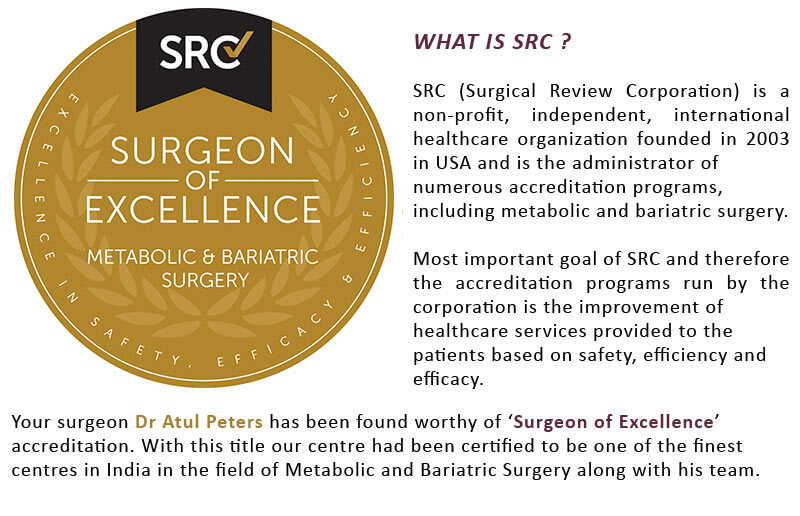
  • Accredited Facilities: Choose a surgeon affiliated with highly reputable surgical societies and accredited hospitals or surgical centers. This affiliation indicates adherence to stringent quality standards and a commitment to excellent patient care.
  • Comprehensive Care Services: Opt for a center that provides a complete spectrum of care, including thorough pre-operative assessments, expert surgical intervention, tailored nutritional guidance, and comprehensive post-operative support.
  • Multidisciplinary Team: Ensure the center employs a dedicated team of specialists, including a bariatric surgeon and well-trained surgical team, bariatric nurse practitioner, bariatric dietitians, and program coordinators. A cohesive team approach is vital for achieving optimal results and delivering thorough patient support.
  • Success Stories and Testimonials: Confirm that both the center and the surgeon have relevant accreditations and a proven history of successful outcomes in metabolic surgery. Review patient feedback and success rates to assess their effectiveness and patient satisfaction.

By carefully evaluating these criteria, you’ll be well-positioned to choose a surgeon and center that aligns with your goals for a successful and supportive bariatric surgery experience.

The journey to weight loss success

The journey to weight loss success begins with a consultation with a qualified robotic bariatric surgeon. During the consultation, the surgeon will assess your overall health, weight loss goals, and suitability for robotic surgery. They will also discuss the procedure, potential risks, benefits, and recovery process.

Pre-surgery consultations and preparations

Before the surgery, as per your health condition, you might undergo various tests and assessments to ensure your overall health and suitability for the procedure. These may include blood tests, a physical examination, and potentially a psychological evaluation.

Post-surgery care and lifestyle changes

After the surgery, you will need to follow a strict post-operative care plan to ensure proper healing and recovery. This may involve dietary modifications, medication, and regular follow-up appointments with your surgeon.

It’s important to note that weight loss surgery is just the first step in achieving your weight loss goals. Long-term success hinges upon ongoing lifestyle changes, including a healthy diet, regular exercise, and behavior modification.

Conclusion

The robotic surgical system has been successfully employed in hundreds of thousands of procedures worldwide. Robotic bariatric surgery, as an advanced, minimally invasive technique, provides several advantages over traditional laparoscopic bariatric surgery. These benefits include a lower risk of complications such as gastrointestinal leaks and wound infections, a shorter hospital stay, and a decreased likelihood of requiring follow-up surgeries or converting to traditional open surgery.

Choosing the best robotic surgeon in Delhi for weight loss surgery can significantly impact your journey to a healthier, happier life.

By considering the factors outlined in this blog, you can make an informed decision and partner with a skilled surgeon who can guide you toward your weight loss goals.

Schedule a consultation today with the best robotic bariatric surgeon in Delhi and take the first step toward a healthier, more fulfilling future.

Reference Links

  1. https://www.atulpeters.com/other-surgeries/robotic-surgery
  2. https://asmbs.org/
  3. https://www.facs.org/
  4. https://www.nejm.org/
  5. https://jamanetwork.com