Gallbladder surgery at a glance
| Operation |
Laparoscopic or robotic cholecystectomy (gallbladder removal), with CBD exploration when stones are in the bile duct |
| Incisions |
3 to 4 small keyhole cuts |
| Anaesthesia |
General anaesthesia |
| Operating time |
About an hour for an uncomplicated case; longer if the gallbladder is inflamed or the bile duct needs exploring |
| Hospital stay |
Usually day-care or one night |
| Back to desk work |
Usually within about a week |
| Where |
Max Smart Super Speciality Hospital, Saket; consultations also at SMART Cliniqs, Saket |
Typical values. Your own plan depends on your scans and condition
Which doctor treats gallstones and gallbladder problems?
Gallbladder surgery is performed by a general surgeon trained in laparoscopic (minimal access) surgery, often called a gallbladder surgeon or cholecystectomy surgeon. A gastroenterologist may see you first for diagnosis, and for ERCP if stones have moved into the bile duct.
If an ultrasound has shown gallstones and you have symptoms, a surgical consultation is the right next step, because removing the gallbladder is the lasting cure. Dr. Peters can review your scans, tell you whether you need surgery at all, and plan the safest approach for you.
Understanding the gallbladder and gallstones
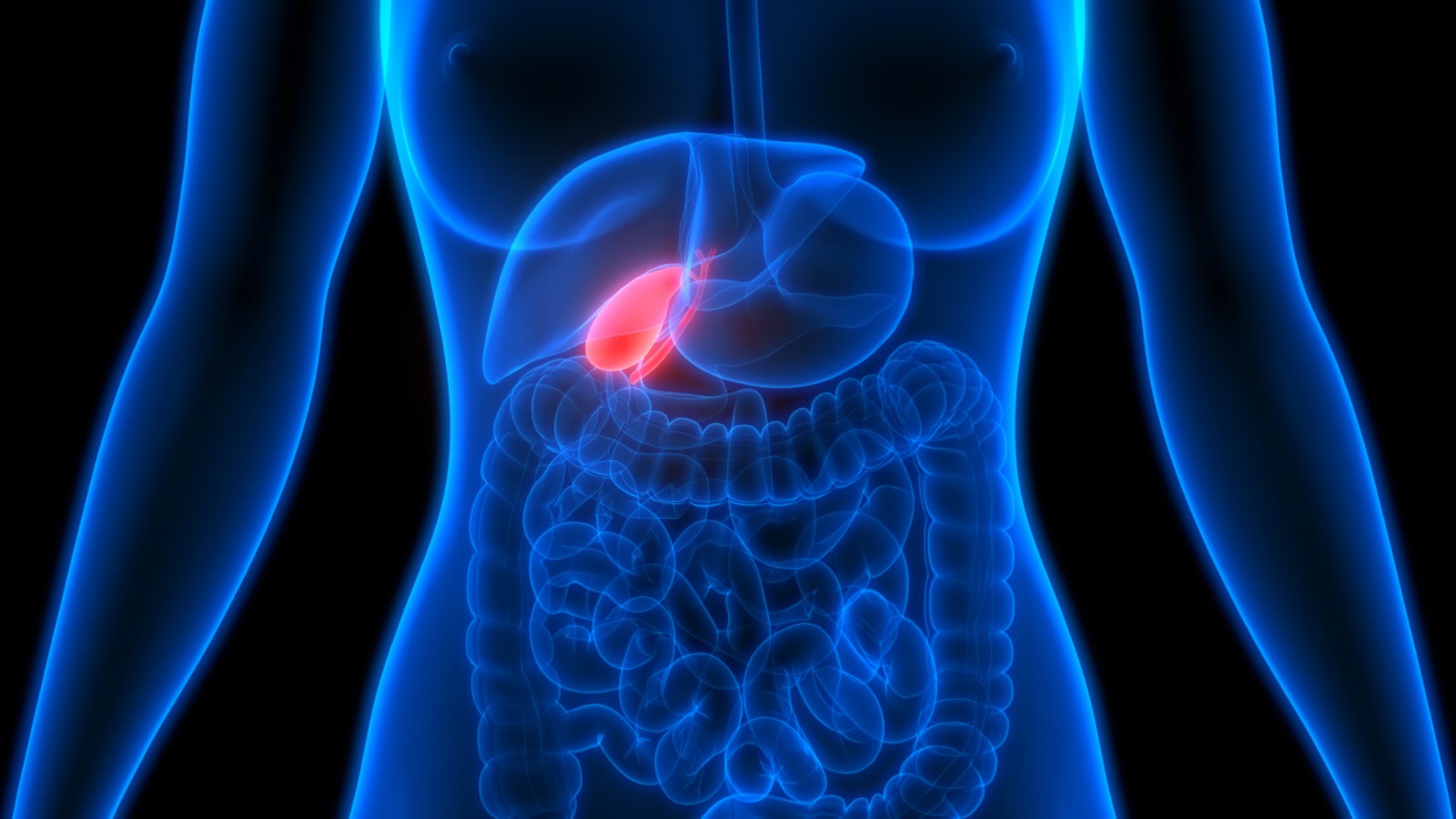
The gallbladder is a small pouch just below the liver. It stores and concentrates bile made by the liver. After you eat, it contracts and pushes bile through the bile ducts into the small intestine, where bile helps digest fats.
Most gallbladder trouble starts with stones. Gallstones form when cholesterol or bilirubin in bile crystallises, and can range from a grain of sand to a golf ball. Four terms come up often:
| Term |
What it means |
| Cholelithiasis |
Stones in the gallbladder |
| Cholecystitis |
Inflammation or infection of the gallbladder, usually because a stone blocks its outlet |
| Choledocholithiasis |
Stones in the common bile duct |
| Biliary pancreatitis |
Inflammation of the pancreas caused by a gallstone blocking the shared drainage channel |
A stone that blocks the bile duct can stop bile from flowing and cause jaundice.
Gallstone symptoms: when to see a gallbladder doctor
Many gallstones cause no symptoms at all. When they do, the usual signs are:
-
Pain in the upper right or upper middle abdomen, often after a fatty meal, sometimes spreading to the right shoulder or back.
-
Nausea and vomiting.
-
Bloating and indigestion.
-
Fever with chills, which suggests infection.
-
Yellow eyes or skin, dark urine or pale stools, which suggest a blocked bile duct.
Gallstone pain is easily mistaken for acidity or gas. If "acidity" keeps returning, especially after fatty meals or with pain under the right ribs, an ultrasound is worth doing.
Seek urgent care if abdominal pain lasts more than a few hours, or comes with fever, jaundice or repeated vomiting. These can signal an infected gallbladder, a blocked bile duct or pancreatitis.
Who gets gallstones, and when is gallbladder removal advised?
There is no single cause, but some factors raise the risk: being female, age above 40, pregnancy, obesity, rapid weight loss (including after bariatric surgery), diabetes, liver disease, a high-fat, low-fibre diet and a family history of gallstones.
Removal of the gallbladder is advised for:
-
Gallstones that cause symptoms, including repeated attacks of pain
-
Cholecystitis (inflamed gallbladder)
-
Stones in the bile duct
-
Biliary pancreatitis
-
Gallbladder polyps (multiple or serially increase in size on an ultrasound)
-
Calcification of the gallbladder wall
-
Suspected gallbladder cancer
Should I have my gallbladder removed?
Stones that cause no symptoms, often found by chance on a scan, usually need only monitoring. Once symptoms start, delay does not help: repeat attacks can lead to an inflamed gallbladder, a stone in the bile duct or pancreatitis, and an emergency operation is harder than a planned one. Dr. Peters will tell you which situation applies to you.
Timing in acute cholecystitis - Yes, once gallbladder stones are confirmed, you must consult a surgeon and get your gallbladder removal surgery done. Even if you have no symptoms and gallstones are detected during a routine ultrasound, the gallbladder should ideally be removed.
The risk of leaving gallbladder stones untreated can be serious, including complications such as obstructive jaundice and biliary pancreatitis, which can be life-threatening.
In the modern era of advanced surgical technology (robotic/laparoscopic surgery), it is not advisable to take the risk of these complications, even if the risk is as low as 5%.
How gallbladder problems are diagnosed
An ultrasound scan of the abdomen, along with blood tests, diagnoses almost all gallbladder problems. Further tests are needed only in some cases:
| Test |
When it is useds |
| Ultrasound |
First test for stones and gallbladder inflammation |
| Blood tests |
To check liver function, infection and the pancreas |
| MRI of the bile ducts (MRCP) |
When stones may be blocking the bile duct |
| CT scan |
In complex cases, or when a complication is suspected
|
| ERCP |
To remove stones from the bile duct through an endoscope, without a cut
|
Gallbladder surgery in Delhi: your options
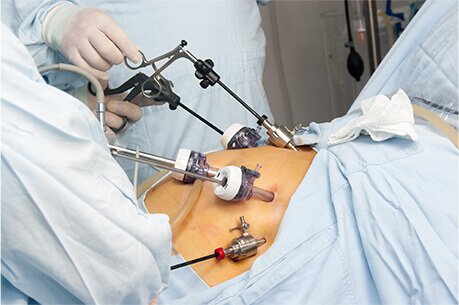
The gallbladder is removed through 3 to 4 small incisions. Dr. Peters chooses the approach that is safest for your anatomy and condition.
Laparoscopic gallbladder surgery (keyhole)
A camera and slim instruments are passed through the incisions. This is the standard keyhole operation, and the most common way gallbladder stones are treated. See more about laparoscopic surgery in Delhi.
Robotic gallbladder surgery in Delhi
Robotic cholecystectomy uses the same small incisions, but the surgeon operates from a console with a magnified 3D view and wristed instruments. It can help in difficult cases, such as an inflamed gallbladder, scarring from earlier surgery or complex anatomy. The robot does not act on its own: the surgeon controls every movement. Dr. Peters is a robotic surgery proctor and operates at a Centre of Excellence for Robotic Surgery. Read more about robotic surgery in Delhi.
CBD exploration
If stones sit in the bile duct and cannot be cleared by ERCP, the duct is opened and cleared during the same keyhole or robotic operation, so you avoid a second procedure.
Open surgery
Needed only rarely, when it is the safer choice for you.
Most people digest food normally without a gallbladder.
Benefits, recovery and life after gallbladder removal
Benefits of minimally invasive surgery
-
Only 3 to 4 small incisions and minimal scarring
-
Usually day-care surgery or a one-night stay
-
Less pain than open surgery
-
Minimal wound care, and drains are not routinely needed
-
Earlier return to everyday activity
What to expect
-
Before: an ultrasound, blood tests and an anaesthesia check. You will be asked to fast for several hours before surgery.
-
Surgery: under general anaesthesia. Uncomplicated cases usually take about an hour; an inflamed gallbladder or bile duct exploration takes longer.
-
After: you begin walking and sipping fluids within hours, move to light food the same day, and go home the same day or the next.
-
At home: most people manage light activity within days and return to desk work within about a week. Heavy lifting waits for one to two weeks. Shoulder-tip pain or bloating for a few days is common after keyhole surgery, because of the gas used to inflate the abdomen; it settles with walking and simple medicines.
-
Call your surgeon if you develop fever, worsening abdominal pain, yellow eyes, repeated vomiting, or redness or discharge at an incision.
Life without a gallbladder
Your liver keeps making bile, which now flows straight into the intestine. Most people eat normally. Some notice looser stools or bloating after fatty meals for a few weeks; smaller, lighter, low-fat meals at first help, and it usually settles. If you would like a structured plan, the Nutrition Clinic can help.
Safety and risks
Gallbladder removal is one of the most commonly performed operations, and it is very safe in experienced hands. Like any surgery it carries small risks: bleeding, infection, bile leakage, injury to a bile duct (rare), and anaesthesia-related problems. Occasionally the surgeon converts to open surgery for safety.
The cornerstone of safe surgery is identifying the bile duct and the gallbladder's artery clearly before anything is cut, a step known as achieving the "critical view of safety". Dr. Peters will explain the risks that apply to you before you consent.
Cost of gallbladder surgery in Delhi and insurance
The cost of gallbladder removal in Delhi varies widely, because no two patients need exactly the same operation. Dr. Peters' team can give you an estimate after your consultation and scan review.
What usually affects the final bill:
| Factor |
Why it matters |
| Technique |
Laparoscopic and robotic surgery differ in equipment and consumables |
| Hospital and room category |
Room type and hospital tier change the daily charges |
| Length of stay |
Day-care or one night costs less than a longer stay |
| Complexity |
An inflamed gallbladder, earlier surgery or CBD exploration adds time and resources |
| Tests and follow-up |
Scans, blood tests and post-operative visits |
Insurance- Removal of a gallbladder for symptomatic stones is generally treated as a medically necessary procedure and is often covered by health insurance, subject to your policy terms, waiting periods and pre-authorisation. Bring your policy details to your consultation and the team can guide you.
How to choose the best gallbladder surgeon in Delhi
Searching for the best gallbladder surgeon in Delhi? Rankings only say so much. These are the questions that matter, and how Dr. Peters answers them:
-
Experience in keyhole surgery. Nearly three decades in minimal access surgery.
-
Robotic expertise. A robotic surgery proctor who trains other surgeons, at a Centre of Excellence for Robotic Surgery.
-
Comfort with complex cases. Inflamed gallbladders, earlier abdominal surgery, and stones in the bile duct (CBD exploration in the same operation when needed).
-
Safety-first technique. Clear identification of the bile duct and artery before any cut.
-
Honest advice. You will be told if surgery is not needed, and which approach suits you.
-
Hospital backup and follow-up. Anaesthesia and intensive care support on site at Max Smart, and follow-up after surgery.
-
Support for out-of-town patients. The Travel Desk helps overseas and outstation patients plan their visit.
Gallbladder surgery hospital in Saket, South Delhi and across Delhi NCR
Dr. Peters operates at Max Smart Super Speciality Hospital in Saket, South Delhi, a Centre of Excellence for Robotic Surgery. Saket is convenient for patients across South Delhi and the wider NCR, including Gurugram, Noida, Faridabad and Ghaziabad. Consultations are also held at SMART Cliniqs, Saket, and Dr. Peters consults in Dubai and Muscat, Oman.
Living abroad? Overseas patients can contact the Travel Desk to plan their visit.
Frequently asked questions about gallbladder surgery
Do I need surgery if my gallstones cause no symptoms?
Not always. Most people with silent stones never develop symptoms, so these are usually just monitored. Dr. Peters will advise removal if you have symptoms, complications, or a condition that makes the gallbladder risky to leave in. Do not delay if symptoms start.
Can gallstones be dissolved, or treated with laser or lithotripsy?
Medicines rarely dissolve stones, work slowly, and new stones tend to form, so treatments that leave the gallbladder in place are seldom suitable. Shock-wave lithotripsy is rarely used for gallbladder stones today, and there is no laser operation that clears stones and leaves the gallbladder in place. Removing the gallbladder is the lasting solution. Laser or shock-wave techniques are sometimes used for large stones in the bile duct, usually during ERCP.
Is robotic surgery better than laparoscopic surgery, and am I a candidate?
Both are minimally invasive with the same aim: less pain and faster recovery. The robotic system adds a magnified 3D view and finer instrument control, which can help in complex cases such as an inflamed gallbladder or earlier abdominal surgery. Most patients are suitable for either. You do not need to decide in advance; Dr. Peters will recommend one after reviewing your scans and history.
How long does the surgery take, and how long will I stay in the hospital?
An uncomplicated operation usually takes about an hour; an inflamed gallbladder or bile duct exploration takes longer. Most patients go home the same day or the next morning.
Is gallbladder surgery painful, and is it major surgery?
Under general anaesthesia you feel nothing during the operation. Afterwards most people have mild discomfort at the incisions and sometimes in the shoulder, which is managed with medicines and improves within a few days. Gallbladder removal is a common, routine operation; keyhole surgery is far less invasive than open surgery, but it is still surgery under general anaesthesia.
When can I return to work?
Desk work is usually possible within about a week. Heavy lifting and strenuous exercise wait a little longer, and Dr. Peters will give you a plan that fits your job.
.
What happens if gallstones are left untreated?
Untreated symptomatic stones can lead to gallbladder inflammation (cholecystitis), infection, bile duct blockage or pancreatitis. These can become serious and may need emergency surgery, which is usually more complex than a planned operation.
What if I also have stones in the bile duct?
These are removed by ERCP, or by CBD exploration during the same operation when ERCP is not possible.
Will I need to change my diet, and are there long-term side effects?
For a few weeks, eat smaller, low-fat meals. Most people then return to a normal diet and recover fully without long-term problems. A few notice mild digestive changes, such as looser stools, which usually settle.
Can gallstones come back after the gallbladder is removed?
Stones cannot form in a gallbladder that has been removed. Rarely, stones develop in the bile ducts later, so new or persistent pain or jaundice after surgery should be checked.
Can keyhole surgery turn into open surgery?
Occasionally. If severe inflammation, dense scarring, bleeding or unclear anatomy make the keyhole approach unsafe, the surgeon converts to open surgery. It is a safety decision rather than a failure, and it is discussed with you as a possibility when you consent.
What should I do about a gallbladder polyp?
Most small polyps are harmless and are watched with periodic ultrasound. Removal is usually advised when a polyp is larger than about 1 cm, is growing, or causes symptoms. Dr. Peters will advise based on your scan.
How much does gallbladder surgery cost in Delhi, and is it covered by insurance?
Cost depends on the technique, hospital and room, length of stay and complexity. Most insurance policies cover surgery for symptomatic gallstones, subject to their terms. See the cost section above, and ask the team for an estimate at your consultation.
Can international patients get treatment here?
Yes. Overseas patients can contact the Travel Desk to plan their visit.