Is Bariatric Surgery Covered by Insurance? {Key Facts}

Bariatric surgery has become one of the most effective treatments for severe obesity and obesity-related health problems. Many people struggling with long-term weight gain often ask an important question before considering surgery: Is bariatric surgery covered by insurance?

The good news is that in many cases, the answer is yes. However, coverage depends on specific conditions, medical eligibility, and the terms of your insurance policy. In major cities, options like Bariatric Surgery in Delhi are widely available with experienced specialists such as Dr. Atul Peters, who guide patients through both medical and insurance processes.

In this detailed guide, we will explain how insurance coverage works, who qualifies, what is included, and how to claim it.

Is Bariatric Surgery Covered by Insurance?

Is Bariatric Surgery Covered by Insurance? Learn about eligibility, policy terms, waiting periods, and documents required to claim bariatric surgery insurance benefits.

Book Your Appointment Today

Understanding Bariatric Surgery

Bariatric surgery refers to weight loss procedures that change how the digestive system works. These surgeries either reduce the size of the stomach or change how food is absorbed, or both. The goal is to help patients lose significant weight when diet, exercise, and medications have not worked.

Common types of bariatric surgery include:

These procedures not only help in weight reduction but also improve serious conditions like diabetes, high blood pressure, sleep apnea, fatty liver disease, and joint pain.

Does Insurance Cover Bariatric Surgery?

Yes, many health insurance companies now offer coverage for bariatric surgery — but only when it is medically necessary.

In earlier years, insurance companies often treated bariatric surgery as a cosmetic procedure. However, guidelines have changed. Today, many insurers recognize obesity as a medical condition and include bariatric surgery in their coverage, provided specific criteria are met.

So if insurance covers bariatric surgery, the answer depends on your policy terms and medical eligibility.

When is Bariatric Surgery Considered Medically Necessary?

Insurance companies usually approve coverage when surgery is required for health reasons rather than cosmetic weight loss.

It is considered medically necessary when:

  • Your Body Mass Index (BMI) is 40 or above
  • Your BMI is between 35–40 with obesity-related health conditions
  • You have tried supervised diet and lifestyle programs without long-term success
  • A qualified doctor recommends surgery

Proper documentation from your doctor is essential. Without medical proof, insurance claims may be rejected.

Bariatric Surgery Covered by Insurance in India

The situation in India has improved significantly. Many insurers now provide bariatric surgery covered by insurance in India if the procedure meets medical guidelines.

However, coverage varies from one policy to another. Some policies include bariatric surgery under surgical benefits, while others may include it under specific conditions.

Before planning surgery, it is important to check:

  • Whether bariatric surgery is mentioned in your policy
  • The waiting period
  • Maximum claim limits
  • Sub-limits on room rent or surgeon fees

Understanding these details helps avoid last-minute surprises.

What Costs Are Usually Covered?

When your policy includes coverage, the following expenses are typically covered:

  • Hospital room charges
  • Surgeon and anesthetist fees
  • Operating theatre charges
  • Diagnostic tests before surgery
  • Medicines during hospital stay
  • Short-term post-operative care

Some insurers also offer cashless treatment at network hospitals, which means you do not need to pay the full amount upfront.

However, always confirm whether your health insurance plan that covers bariatric surgery provides full or partial coverage.

What Is Usually Not Covered?

Even if your insurance supports bariatric surgery, certain items are usually excluded:

  • Surgery done for cosmetic reasons
  • Surgery before completion of the waiting period
  • Procedures without medical recommendation
  • Complications caused by non-compliance
  • Body contouring or excess skin removal after weight loss

Reading your policy document carefully is extremely important.

List of Insurance That Cover Bariatric Surgery

Below is a list of insurance companies and TPAs commonly associated with policies that may support bariatric surgery coverage in India:

  • Acko General Insurance Company Ltd
  • Aditya Birla Health Insurance Company Ltd
  • Bajaj Allianz General Insurance Company Ltd
  • Care Health Insurance Co. Ltd
  • Chola Mandalam MS General Insurance Co. Ltd
  • Ericson TPA Healthcare Pvt. Ltd
  • Family Health Plan (TPA) Ltd
  • Future Generali India Insurance Co. Ltd
  • Galaxy Health Insurance
  • Genins India TPA Limited
  • Go Digit General Insurance
  • Good Health TPA Services Ltd
  • HDFC Ergo General Insurance Co. Ltd
  • Health India TPA Services Pvt. Ltd
  • Health Insurance TPA Of India Limited
  • Heritage Health TPA Pvt. Ltd
  • ICICI Lombard General Insurance Co. Ltd
  • ICICI Prudential Life Insurance Co. Ltd
  • IFFCO Tokio General Insurance Co. Ltd
  • Liberty Videocon General Insurance Company Limited
  • Link-K Insurance TPA Services
  • Magma HDI General Insurance Company Limited
  • Manipal Cigna Health Insurance Co Ltd
  • MD India Healthcare Services (TPA) Pvt. Ltd
  • Medi Assist India TPA Pvt. Ltd
  • Medsave Healthcare TPA Ltd
  • National Insurance Company Limited
  • Navi General Insurance Limited
  • Niva Bupa Health Insurance Company Limited
  • Paramount Health Services (TPA) Pvt. Ltd
  • Park Mediclaim TPA Pvt. Ltd
  • Raksha TPA Pvt. Ltd
  • Reliance General Insurance Co. Ltd
  • Safeway TPA Services Pvt. Ltd
  • SBI General Insurance Company Limited
  • Star Health & Allied Insurance Co. Ltd
  • Tata AIG General Insurance Company
  • The New India Assurance Co. Ltd
  • The Oriental Insurance Company Limited
  • United India Insurance Company Limited
  • Universal Sompo General Insurance Co. Ltd
  • Vidal Health TPA Pvt. Ltd
  • Volo Health Insurance TPA Private Limited

This list helps patients searching for insurance that covers bariatric surgery in India.

Things to Consider Before Buying Insurance

If you are planning surgery in the future, choose a policy that clearly mentions bariatric surgery coverage.

Look for:

  • Clear inclusion of obesity treatment
  • Reasonable waiting period
  • Higher sum insured
  • Minimal sub-limits
  • Cashless network hospital access

Choosing the right insurance early can make your treatment journey much smoother.

How to Claim Insurance for Bariatric Surgery

The process of claiming insurance is straightforward if done properly.

Start by reviewing your policy document and confirming that bariatric surgery is included. Then consult your surgeon and request a written recommendation stating the medical necessity of the procedure.

Next, submit medical reports, BMI records, test results, and doctors’ notes to the insurance company for pre-authorization. Approval must be obtained before surgery whenever possible.

Once surgery is completed, submit hospital bills and discharge summaries for claim processing. Depending on your policy, the claim may be settled through cashless mode or reimbursement.

Is Bariatric Surgery Covered by Insurance?

Is Bariatric Surgery Covered by Insurance? Learn about eligibility, policy terms, waiting periods, and documents required to claim bariatric surgery insurance benefits.

Book Your Appointment Today

Final Thoughts

So, is bariatric surgery covered by insurance? In many cases, yes — but only when it meets medical guidelines and policy requirements.

The availability of health insurance that covers bariatric surgery has made treatment more accessible for patients struggling with severe obesity. However, careful planning, proper documentation, and understanding your policy terms are essential before moving forward.

If you are considering weight loss surgery, consulting an experienced specialist like Dr. Atul Peters and reviewing your insurance coverage in advance will help you make a confident and financially secure decision.
Frequently Asked Questions

Is Bariatric Surgery covered by insurance in India?

Yes, many insurers now provide coverage if the surgery is medically necessary and policy conditions are met.

Does insurance cover bariatric surgery for weight loss alone?

No. Insurance usually covers surgery only when it is required for treating obesity-related health problems, not for cosmetic weight loss.

Can I get cashless treatment for Bariatric Surgery?

Yes, if your hospital is in the insurer’s network and you receive pre-authorization approval.

Do all health insurance plans cover Bariatric Surgery?

No. Coverage depends on the specific policy. Always read the policy terms carefully.

What documents are required for approval?

You typically need BMI records, medical reports, doctor recommendations, and proof of previous weight management attempts.

How to Sleep After Gallbladder Surgery? {2026 Guide}

Getting proper rest after surgery is very important for healing. Many patients worry about how to sleep after gallbladder surgery, especially during the first few days. Whether you have undergone laparoscopic or open surgery, your body needs comfort, proper positioning, and enough rest to recover smoothly.

If you recently had Gallbladder Surgery in Delhi or anywhere else, understanding safe sleeping positions and pain management tips can help you recover faster. Experienced surgeons like Dr. Atul Peters always guide patients about post-surgery care, including how to rest properly without straining the healing area.

In this detailed guide, we will explain everything so you can sleep comfortably and safely after surgery.

How to Sleep After Gallbladder Surgery?

Learn how to sleep after gallbladder surgery with safe positions, pain relief tips, and recovery advice for better comfort and faster healing at home.

Book Your Appointment Today

Understanding Gallbladder Surgery

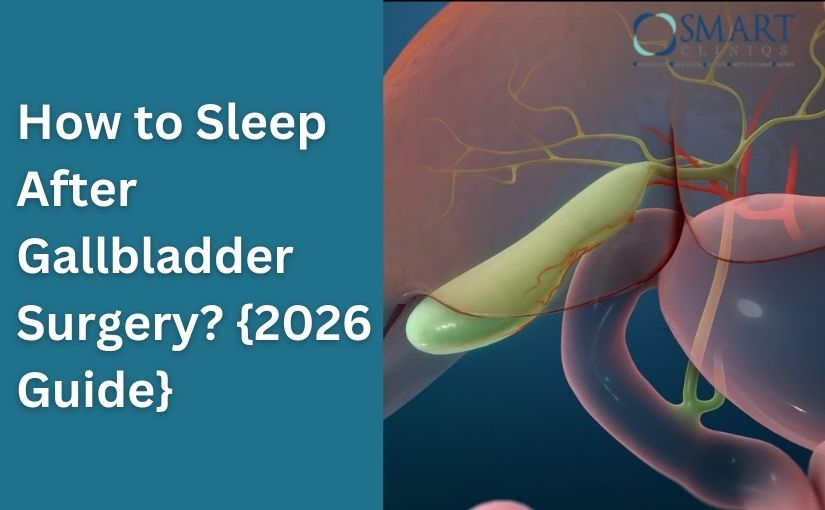
The gallbladder is a small, pear-shaped organ located beneath the liver on the right side of the abdomen. Its main role is to store bile, a digestive fluid that helps the body break down fats. When gallstones form or when the gallbladder becomes inflamed or infected, it can cause severe abdominal pain, nausea, vomiting, bloating, and digestive discomfort. In such cases, doctors may recommend removing the gallbladder through a surgical procedure called cholecystectomy. This surgery is commonly performed and is considered safe and effective for relieving recurring symptoms.

Main types of Gallbladder Surgery:

1. Laparoscopic Gallbladder Surgery

This is the most common method used today. Small cuts are made in the abdomen, and a tiny camera guides the surgeon during the procedure. It usually causes less pain and leaves minimal scars. Most patients recover quickly and can return to normal activities within 1–2 weeks.

2. Open Gallbladder Surgery

This method involves a larger incision in the abdomen and is generally recommended for complicated cases or severe infections. Recovery time is longer compared to laparoscopic surgery. Patients may need a few weeks to fully heal, and a hospital stay is usually slightly longer.

Best Sleeping Positions After Gallbladder Surgery

Getting proper rest after surgery is very important for healing. In the first few days, your abdomen may feel sore, tight, or bloated. Choosing the right sleeping position helps reduce pressure on the stitches, improves comfort, and supports faster recovery. Most patients find that simple adjustments in posture and pillow support make a big difference in sleep quality.

Sleeping Positions After Gallbladder Surgery

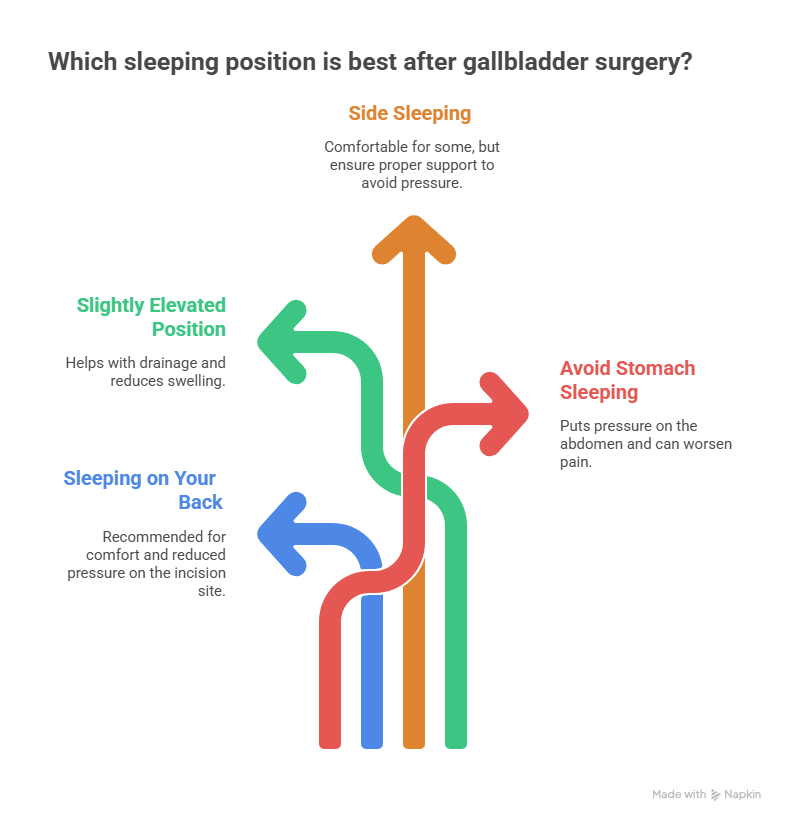
1. Sleeping on Your Back (Most Recommended)

Sleeping on your back is usually the safest and most comfortable position during the initial recovery phase. This position keeps your abdomen stable and prevents strain on the surgical area. It also reduces the risk of accidentally turning onto the stitches during sleep.

Helpful tips:

  • Place a pillow under your knees to reduce lower back strain
  • Use a small pillow near your abdomen for gentle support
  • Slightly elevate your upper body with 1–2 pillows

2. Sleeping in a Slightly Elevated Position

Many patients feel more comfortable sleeping with their upper body slightly raised, especially during the first week. Elevation helps reduce gas discomfort and bloating, which are common after surgery. It also improves breathing and decreases pressure on the abdomen.

You can:

  • Use multiple pillows behind your back
  • Sleep in a recliner chair if available
  • Avoid lying completely flat during the first few nights

3. Side Sleeping (When Comfortable)

After a few days to a couple of weeks—depending on your comfort—you may slowly try side sleeping. It is important to move gently and stop if you feel pain. Most people find side sleeping comfortable once swelling reduces.

For safer side sleeping:

  • Use a pillow between your knees
  • Place a small pillow against your stomach for support
  • Avoid sudden twisting movements

4. Positions to Avoid

Some sleeping positions can strain your abdomen and delay healing. It is best to avoid them until you are fully recovered.

Avoid:

  • Sleeping on your stomach
  • Lying flat without support in the first few days
  • Sudden turning or jerking movements
  • Curling tightly into a fetal position

With proper positioning and support, most patients begin sleeping comfortably within one to two weeks. Always listen to your body and follow your doctor’s advice for a smooth recovery.

How to Sleep With Gallbladder Pain

Before surgery, many patients suffer severe pain and wonder how to sleep with gallbladder pain. Even after surgery, mild discomfort can disturb sleep.

Here are helpful tips:

Pain Management Tips

  • Take prescribed pain medicines on time
  • Avoid skipping medications at night
  • Use a warm compress (if doctor approves)
  • Practice deep breathing exercises

Gas Pain Relief

After laparoscopic surgery, gas is used to inflate the abdomen. This can cause shoulder and upper abdominal pain.

To reduce gas discomfort:

  • Walk several times a day, slowly
  • Avoid lying completely flat
  • Drink warm water
  • Avoid heavy meals at night

Step-by-Step Guide: How to Get Into Bed Safely

Getting into bed can strain your abdominal muscles. Follow these steps:

  1. Sit at the edge of the bed
  2. Lower your upper body slowly
  3. Use your arms to support your weight
  4. Swing legs onto the bed gently
  5. Avoid sudden twisting

To get out of bed:

  1. Roll to your side first
  2. Use your arms to push yourself up
  3. Lower legs off the bed slowly

This technique protects your stitches.

How Long Does Sleeping Discomfort Last?

Most patients feel:

  • Mild discomfort for 5–7 days
  • Significant improvement after 2 weeks
  • Almost normal sleep after 3–4 weeks

Open surgery patients may take longer.

If you had Gallbladder Surgery in Delhi under an experienced surgeon like Dr. Atul Peters, proper post-surgery guidance usually ensures a smooth recovery.

Night-Time Care Tips After Gallbladder Surgery

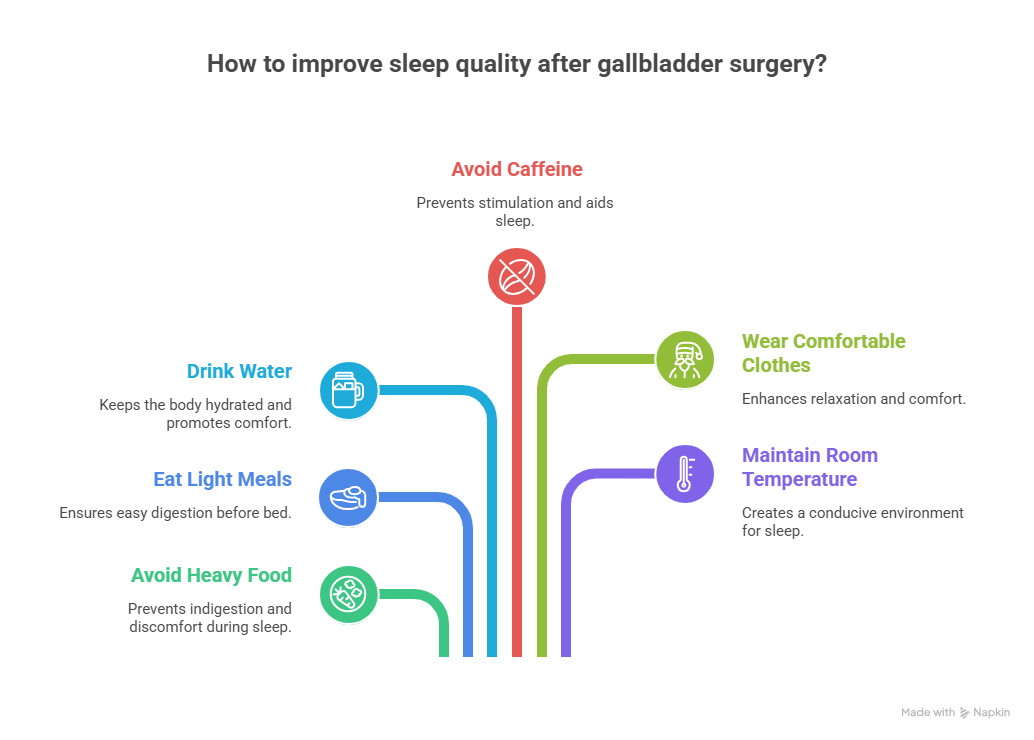
Night-Time Care Tips After Gallbladder Surgery

To improve sleep quality:

  • Avoid heavy or oily food at dinner
  • Eat light meals 2–3 hours before bed
  • Drink enough water
  • Avoid caffeine after evening
  • Wear loose, comfortable clothes
  • Keep the room temperature comfortable

Foods That Help Better Sleep

After surgery, your digestive system needs time to adjust.

Choose:

  • Soft foods
  • Khichdi
  • Oatmeal
  • Boiled vegetables
  • Soup
  • Yogurt

Avoid:

  • Fried food
  • Spicy food
  • Carbonated drinks
  • Large fatty meals

Warning Signs – When to Call Your Doctor

Seek medical help if you experience:

  • Severe pain while lying down
  • Fever
  • Redness or discharge from stitches
  • Vomiting
  • Severe bloating
  • Persistent inability to sleep due to pain

Common Mistakes to Avoid

  • Sleeping flat immediately after surgery
  • Turning suddenly in bed
  • Ignoring pain medications
  • Sleeping on the stomach
  • Lifting heavy objects before bedtime

Emotional and Mental Health After Surgery

Sometimes anxiety can disturb sleep. It is normal to feel:

  • Worried about stitches
  • Fearful of turning in bed
  • Nervous about recovery

Deep breathing, meditation, and reassurance from your surgeon help reduce anxiety.

When Will Sleep Return to Normal?

Most patients:

  • Sleep better within 7–10 days
  • Return to normal sleeping habits in 3–4 weeks
  • Feel completely comfortable in 4–6 weeks

Healing speed varies from person to person.

How to Sleep After Gallbladder Surgery?

Learn how to sleep after gallbladder surgery with safe positions, pain relief tips, and recovery advice for better comfort and faster healing at home.

Book Your Appointment Today

Final Thoughts

Learning how to sleep after gallbladder surgery is an important part of recovery. Proper positioning, pain management, and patience make a big difference. Whether you are recovering from Gallbladder Surgery or anywhere else, always follow your surgeon’s advice.

Experienced surgeons like Dr. Atul Peters emphasize post-operative care, including safe sleeping habits, to ensure smooth healing. Within a few weeks, most patients return to their normal sleeping patterns and daily routine comfortably. Take it slow, listen to your body, and give yourself time to heal.

Frequently Asked Questions

How to sleep after Gallbladder Surgery?

Sleep on your back with pillows supporting your upper body and knees. Avoid lying flat in the first few days and move slowly while turning.

Sleeping on the right side after Gallbladder Surgery – is it safe?

It is better to avoid the right side in the first week. After 7–10 days, you may try if the pain is minimal and your doctor allows.

When can I lay on my side after Gallbladder Surgery?

Usually, after 1–2 weeks for laparoscopic surgery. Open surgery patients may need 2–4 weeks before side sleeping feels comfortable.

Is it ok to sleep on your side after gallbladder surgery?

Yes, but only when you feel comfortable. Use a pillow support to reduce pressure on your abdomen.

How to sleep with Gallbladder pain before surgery?

Sleep slightly upright, avoid heavy meals, use warm compresses, and take prescribed pain medication.

How long does sleep discomfort last after Gallbladder Surgery?

Mild discomfort lasts about a week. Most patients feel significantly better after 2 weeks.

Can I sleep on my stomach after Gallbladder Surgery?

No. Avoid stomach sleeping for at least 4–6 weeks as it puts pressure on the abdomen.

Is Gastric Bypass Surgery Reversible?

Gastric bypass surgery is one of the most effective and widely performed bariatric procedures worldwide. For individuals struggling with severe obesity and related health conditions, it has provided meaningful, long-term weight loss and significant improvement in medical problems such as type 2 diabetes, high blood pressure, sleep apnea, joint pain, and fatty liver disease. Beyond numbers on a scale, many patients experience improved energy levels, better mobility, enhanced confidence, and an overall better quality of life. Today, Gastric Bypass Surgery in Delhi is widely sought by patients looking for advanced surgical care combined with structured long-term follow-up.

Before undergoing surgery, however, it is completely natural for patients and families to ask important questions. One of the most common concerns is: Is gastric bypass surgery reversible? This question usually does not arise from doubt alone — it reflects a thoughtful desire to understand the procedure fully and feel reassured before making a life-changing decision. In this article, we will explore what reversibility truly means in medical terms, when reversal may be considered, what alternatives exist, and how patients can approach this decision with clarity and confidence.

Is Gastric Bypass Surgery Reversible?

Is gastric bypass surgery reversible? Learn when reversal is possible, why it is rare, and what patients should know before considering this option.

Book Your Appointment Today

Understanding Gastric Bypass Surgery

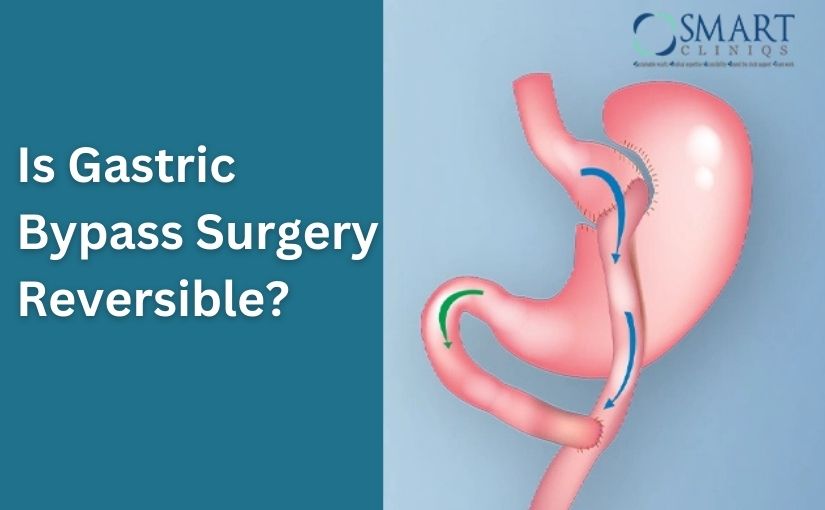
Gastric bypass, also known as Roux-en-Y gastric bypass, works by altering the structure
and function of the digestive system. The procedure involves two major components:
restriction and malabsorption, along with important hormonal changes.

During surgery:

  • A small pouch is created from the upper portion of the stomach. This pouch becomes the new, smaller stomach.
  • The small intestine is divided, and a portion of it is connected directly to the new stomach pouch.
  • The remaining part of the stomach and the first segment of the small intestine are bypassed.

Because of these changes, patients feel full after eating smaller quantities of food. In
addition, the bypassed section reduces calorie and nutrient absorption to some extent.
Importantly, the surgery also influences gut hormones that regulate hunger, fullness, and
blood sugar control.

This is one reason gastric bypass is particularly effective in improving or even resolving
type 2 diabetes. The procedure is designed as a long-term treatment for obesity and
metabolic disease, not as a temporary measure.

What Does “Reversible” Mean in Medical Practice?

In everyday conversation, the word “reversible” often implies something that can be
easily undone, with everything returning exactly to its original state. In medicine,
however, the meaning is more nuanced.

Technically speaking, surgeons may be able to reconstruct the original anatomy in
selected cases. However, this does not mean the process is simple, risk-free, or
commonly performed. Gastric bypass permanently alters the digestive tract. Even if
anatomy is surgically restored, the body may not function exactly as it did before surgery.

Therefore, gastric bypass should always be viewed as a long-term commitment to health.
Reversal is not considered a routine option or a backup plan — it is reserved for very
specific medical situations.

Can Gastric Bypass Be Reversed?

Yes, reversal is technically possible. However, it is uncommon and considered only when there are serious medical reasons that cannot be managed through other treatments.

It is important to clarify what reversal is NOT typically done for:

  • Weight regain alone
  • Emotional hesitation or second thoughts
  • Temporary digestive discomfort
  • Lifestyle dissatisfaction

In such situations, doctors usually recommend structured nutritional counseling, behavioral support, medical therapy, or revision surgery rather than complete reversal.

When Might Reversal Be Considered?

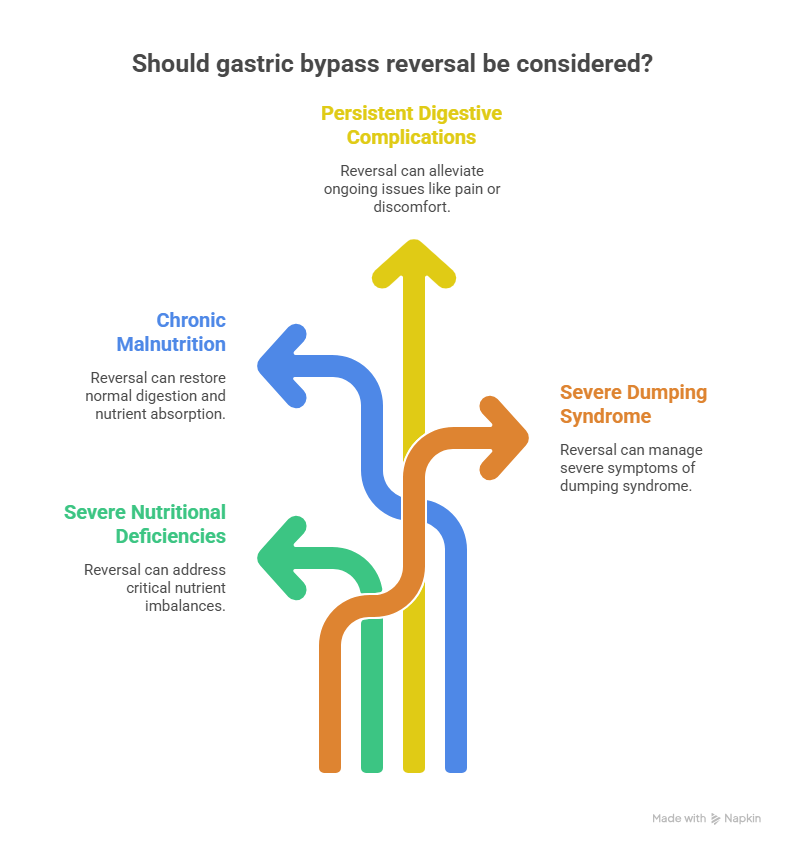
Gastric Bypass Reversal

Most patients never require reversal and do very well with appropriate follow-up care.
However, in rare cases, surgeons may evaluate reversal if significant complications
persist despite optimal medical treatment.

1. Severe Nutritional Deficiencies

After gastric bypass, lifelong vitamin and mineral supplementation is essential.
Most individuals maintain healthy levels with proper follow-up. In rare instances,
However, some patients may develop persistent deficiencies, such as severe iron deficiency
anemia, vitamin B12 deficiency, or calcium and vitamin D deficiency —
despite careful management.

If these deficiencies become severe and unresponsive to treatment, further surgical
Intervention may be considered.

2. Chronic Malnutrition

Very rarely, a patient may struggle with maintaining adequate protein and calorie intake
despite structured dietary planning and support. Signs may include excessive weight loss,
muscle wasting, profound weakness, and impaired immunity. In such uncommon cases,
the medical team may evaluate whether surgical modification is necessary

3. Persistent Digestive Complications

Some complications — such as strictures (narrowing at the connection site),
recurrent ulcers, or internal hernias — can occasionally occur. Most of these issues are
treatable with medication or minor corrective procedures. Only when they remain
unresolved after multiple interventions might a more extensive surgical solution be
discussed.

4. Severe, Refractory Dumping Syndrome

Dumping syndrome refers to symptoms that occur when food moves rapidly
from the stomach pouch into the small intestine. Mild symptoms are relatively common
and usually improve with dietary adjustments. Severe and persistent symptoms
that significantly impair quality of life — and do not respond to medical therapy —
may require further evaluation.

Revision Surgery vs. Complete Reversal

In many situations, revision surgery is preferred over full reversal. Revision procedures aim to correct a specific issue without restoring the original anatomy entirely.

  • Resizing or reshaping the stomach pouch
  • Correcting a narrowing (stricture)
  • Treating ulcers surgically
  • Modifying the intestinal connection

Revision procedures are generally less complex than complete reversal and often provide
effective solutions while preserving the metabolic benefits of gastric bypass.

Risks Associated with Reversal Surgery

Any repeat abdominal surgery carries higher technical complexity compared to a primary operation. Scar tissue, altered anatomy, and previous surgical connections increase the challenge. Potential risks include bleeding, infection, leakage at surgical sites, and longer recovery time.

For this reason, surgeons carefully weigh the risks and benefits before recommending reversal. Fortunately, such situations are rare, and most patients continue to do well with routine follow-up and adherence to nutritional guidelines.

Making an Informed Decision Before Surgery

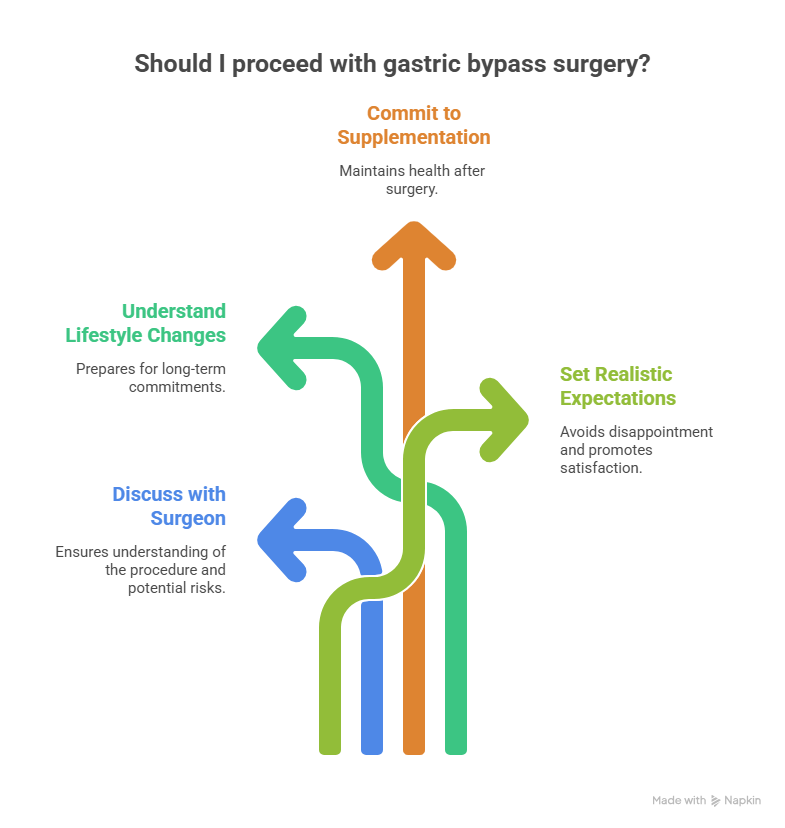
Should I proceed with Gastric Bypass Surgery

Understanding the concept of reversibility should not create fear. Instead, it should
Empower patients to make informed decisions.

Before proceeding with gastric bypass, patients are encouraged to:

  • Have detailed discussions with their bariatric surgeon
  • Understand the long-term lifestyle and dietary commitments required
  • Commit to lifelong supplementation and medical follow-up
  • Set realistic expectations about weight loss and health outcomes

When performed for appropriate medical indications and supported by structured
Aftercare, gastric bypass remains one of the safest and most effective treatments for
severe obesity.

Long-term success depends not only on the surgery itself but also on the partnership
between the patient and the medical team. Education, follow-up, and consistency play
a vital role in maintaining excellent outcomes.

Is Gastric Bypass Surgery Reversible?

Is gastric bypass surgery reversible? Learn when reversal is possible, why it is rare, and what patients should know before considering this option.

Book Your Appointment Today

Final Thoughts

Gastric bypass surgery is intended to be a lifelong metabolic solution. While reversal is technically possible, it is rare and reserved for carefully selected medical situations. It is not a routine option and is considered only when the benefits clearly outweigh the risks. With expert guidance from Dr. Atul Peters, patients are carefully evaluated and supported in making informed decisions before undergoing the procedure.

Rather than focusing primarily on reversibility, patients benefit more from understanding how the procedure works, what lifestyle changes are required, and how long-term follow-up ensures safety and success. With proper guidance, commitment, and ongoing care, gastric bypass continues to transform lives by improving health, mobility, and overall well-being.

Frequently Asked Questions

Is Gastric Bypass Surgery reversible?

Yes, but only in rare medical situations. It is not routinely reversed and involves significant surgical risk.

Why would someone need a Gastric Bypass reversal?

Reversal is considered mainly for severe nutritional deficiencies, chronic malnutrition, or serious complications that cannot be managed otherwise.

Is Gastric Bypass reversal safe?

It carries higher risks than the original surgery and should only be done by experienced bariatric surgeons.

Can Gastric Bypass be reversed due to weight regain?

No. Weight regain alone is not a valid reason for reversal. Other treatments are recommended instead.

Is revision surgery better than reversal?

In most cases, yes. Revision surgery is less risky and often solves complications without undoing the entire procedure.

Will I gain weight after Gastric Bypass reversal?

Weight regain is common after reversal, which is why lifestyle changes remain important.

Should I worry about reversibility before choosing surgery?

Rather than worrying, focus on understanding the procedure, committing to lifestyle changes, and choosing an experienced surgeon.

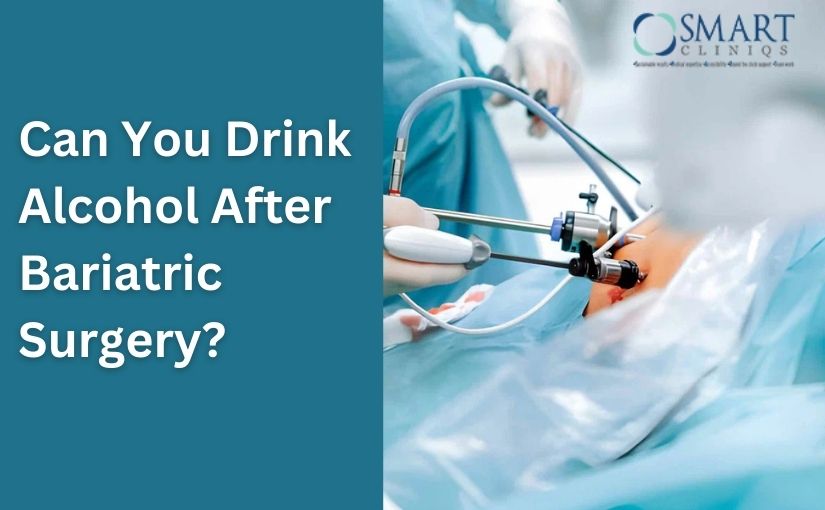
Can You Drink Alcohol After Bariatric Surgery?

Bariatric surgery is a life-changing procedure that helps people lose weight, improve health conditions like diabetes and blood pressure, and build a healthier lifestyle. However, after surgery, the body processes food and drinks very differently—including alcohol.

So, can you drink alcohol after bariatric surgery? The short truth is: yes, but with strict caution—and sometimes not at all, depending on the type of surgery and the time since your operation.

If you’ve undergone Bariatric Surgery in Delhi or are planning to, especially under expert care like Dr. Atul Peters, understanding how alcohol affects your body after surgery is critical for your safety.

Understanding Bariatric Surgery

Bariatric surgery is a medical procedure designed to help people lose significant weight when diet, exercise, and lifestyle changes alone have not worked. It is usually recommended for individuals who are severely overweight or who have obesity-related health problems such as diabetes, high blood pressure, sleep apnea, or joint pain. The main goal of bariatric surgery is not just weight loss, but long-term improvement in overall health and quality of life.

During bariatric surgery, the size of the stomach is reduced, or the way food moves through the digestive system is changed. Because of this, patients feel full faster, eat smaller portions, and absorb fewer calories. Common types of bariatric surgery include sleeve gastrectomy and gastric bypass. Each procedure works in a slightly different way, but all of them help control hunger, improve metabolism, and support sustainable weight loss.

How Bariatric Surgery Changes Your Body

Bariatric surgery is not just about eating less—it changes how your digestive system works. Depending on the procedure (gastric bypass, sleeve gastrectomy, or others), your stomach size is reduced, and in some cases, part of the intestine is bypassed.

These changes affect:

  • How fast alcohol enters your bloodstream
  • How strongly alcohol affects you
  • How long does alcohol stay in your body

After surgery, alcohol no longer behaves as it did before.

Why Alcohol Affects You More After Bariatric Surgery

After bariatric surgery, your body handles alcohol very differently than before. Even small amounts can feel stronger and last longer. Below are the key reasons explained clearly, with paragraphs and bullet points for easy understanding.

1. Faster Alcohol Absorption

After bariatric surgery, the stomach becomes much smaller, and food or liquids pass into the small intestine more quickly. Alcohol does not stay in the stomach for long, which means it enters the bloodstream much faster than before surgery.

  • Alcohol reaches the small intestine almost immediately
  • The body absorbs alcohol at a rapid rate
  • You may feel drunk after just a few sips
  • The effect starts within minutes instead of gradually

2. Higher Blood Alcohol Levels

Because alcohol is absorbed quickly and more efficiently, blood alcohol concentration (BAC) rises much higher than expected. Even one drink can push alcohol levels beyond what the body can safely handle.

  • A single drink may feel like 2–3 drinks
  • Blood alcohol levels peak faster
  • Risk of dizziness, confusion, and poor coordination increases
  • Legal driving limits can be crossed unintentionally

3. Reduced Alcohol Tolerance

Bariatric surgery significantly lowers alcohol tolerance. The body can no longer process alcohol the same way due to changes in digestion and metabolism.

  • Less alcohol is needed to feel intoxicated
  • Side effects like nausea and lightheadedness occur quickly
  • Loss of control happens faster
  • The margin between “safe” and “too much” becomes very small

4. Slower Breakdown of Alcohol

After surgery, the liver takes longer to break down alcohol. This means alcohol stays in your system for a longer period, increasing its effects and after-effects.

  • Intoxication lasts longer
  • Hangovers feel more intense
  • Fatigue and dehydration increase
  • Alcohol remains in the bloodstream for extended hours

5. Increased Risk of Dehydration

Alcohol is a diuretic, which means it causes fluid loss. After bariatric surgery, patients already consume smaller amounts of fluids at a time, making dehydration more likely.

  • Increased urination leads to fluid loss
  • Difficulty meeting daily fluid intake goals
  • Higher risk of dizziness and weakness
  • Dehydration-related headaches become common

Why Doctors Strongly Limit Alcohol After Surgery

Doctors place strict limits on alcohol consumption after bariatric surgery because the body becomes far more sensitive to alcohol and its effects. Since the digestive system is altered, alcohol is absorbed faster, acts stronger, and stays in the body longer than before. This can create serious health, safety, and weight-related problems. Below are the key reasons explained clearly, using both paragraphs and bullet points.

1. Increased Risk of Alcohol Dependency

After bariatric surgery, some patients experience changes in appetite control and emotional coping mechanisms. Since food intake is limited, alcohol can sometimes become a substitute for emotional relief, increasing the risk of dependency.

  • Faster alcohol absorption increases the “reward” effect
  • Higher risk of addiction transfer from food to alcohol
  • Greater chance of habitual or binge drinking
  • Harder to control intake even with small amounts

2. Rapid Intoxication and Safety Concerns

Because alcohol enters the bloodstream very quickly after surgery, patients can feel intoxicated after just a few sips. This raises serious safety issues in daily life.

  • Sudden dizziness or loss of balance
  • Impaired judgment and coordination
  • Higher risk of falls and injuries
  • Increased danger while driving or operating machinery

3. Interferes With Weight Loss and Maintenance

Alcohol provides empty calories with no nutritional value. After bariatric surgery, even small amounts can slow down weight loss or cause weight regain.

  • High calorie content without feeling full
  • Increased hunger and cravings
  • Reduced fat-burning efficiency
  • Higher chances of long-term weight regain

4. Increased Risk of Stomach Irritation and Ulcers

The stomach becomes smaller and more sensitive after surgery. Alcohol can irritate the stomach lining and interfere with healing.

  • Higher risk of gastric irritation
  • Increased chance of ulcers
  • Worsening acid reflux or heartburn
  • Delayed recovery of the stomach lining

When (and If) Alcohol May Be Considered Safe

If alcohol is allowed at all, doctors usually recommend:

  • Waiting at least 3 months or more
  • Consume only if your bariatric surgeon/dietician allows
  • No drinking on an empty stomach
  • Very small quantities
  • Never before driving

Always consult your bariatric surgeon before making this decision.

Experienced specialists like Dr. Atul Peters emphasize patient-specific guidance rather than general rules.

Signs That Alcohol Is Not Safe for You

Stop drinking and consult your doctor if you experience:

  • Extreme dizziness
  • Nausea or vomiting
  • Rapid heartbeat
  • Loss of control
  • Emotional dependency on alcohol

These signs indicate your body is not tolerating alcohol well after surgery.

Long-Term Impact of Alcohol After Bariatric Surgery

Long-term alcohol use after surgery can lead to:

  • Liver damage
  • Nutritional deficiencies
  • Weight regain
  • Mental health issues

That’s why many surgeons advise complete avoidance, especially in the first few years.

Final Thoughts

Drinking alcohol after weight-loss surgery is not a simple yes-or-no decision. Because the body absorbs alcohol faster and reacts more strongly after bariatric procedures, even small amounts can lead to health risks, delayed recovery, and weight regain. For patients who have undergone Bariatric Surgery in Delhi, following medical advice regarding alcohol is essential to protect both short-term healing and long-term results. In many cases, avoiding alcohol—especially during the first year after surgery—helps ensure safer recovery and better weight-loss outcomes.

Ultimately, the success of bariatric surgery depends on lifelong lifestyle changes, not just the procedure itself. Choosing caution with alcohol supports better digestion, stable energy levels, and sustained weight loss. Under the guidance of an experienced specialist like Dr. Atul Peters, patients can make informed decisions that prioritize health, safety, and lasting success after surgery.

Frequently Asked Questions

Can you drink alcohol after Bariatric Surgery at all?

Some patients may drink occasionally after 3 to 12 months, but only with medical approval and strict limits.

Why does alcohol hit harder after Bariatric Surgery?

Because the stomach is smaller, alcohol reaches the intestine faster, leading to rapid absorption.

Is drinking alcohol after Bariatric surgery dangerous?

Yes, it can be risky due to dehydration, addiction risk, ulcers, and rapid intoxication.

Can a person drink alcohol after Bariatric surgery socially?

Even social drinking should be minimal, infrequent, and only after a doctor’s clearance.

Does alcohol cause weight regain after surgery?

Yes, alcohol contains empty calories and can slow weight loss or cause weight regain.

Which Bariatric surgery is most sensitive to alcohol?

Gastric bypass patients are most sensitive and often advised to avoid alcohol completely.

When is alcohol absolutely not allowed after Bariatric surgery?

During the first 3 months, during rapid weight loss, or if there is a history of addiction or any vital organ disease.