What happens during Gastric Bypass Surgery?

Obesity is one of the most common health issues affecting millions of people worldwide. For some, traditional weight loss methods such as dieting and exercise may not be effective in the long run. That’s where bariatric surgeries like gastric bypass surgery in Delhi come into the picture. However, if you are considering it, you may wonder: What happens during gastric bypass surgery?

In this detailed guide, we’ll explain the procedure step by step, including how it works, what you can expect before, during, and after surgery, as well as the benefits, risks, and recovery process.

What happens during Gastric Bypass Surgery?

In this detailed guide, we’ll explain: “What happens during gastric bypass surgery?”including how it works, what you can expect before, during, and after surgery.

Book Your Appointment Today

Understanding Gastric Bypass Surgery

Gastric bypass surgery is one of the most widely performed bariatric (weight-loss) procedures in the world. It is designed for people who struggle with obesity and find it difficult to lose weight through traditional methods like diet, exercise, or medication.

At its core, gastric bypass works on two principles:

  1. Restriction – The stomach is made smaller so you can eat only small portions of food.
  2. Malabsorption – The food you eat bypasses a section of your small intestine, so fewer calories and nutrients are absorbed.

This combination makes gastric bypass more effective than many other weight-loss methods because it helps you consume fewer calories while also reducing how many your body absorbs.

Why do People Choose Gastric Bypass Surgery?

People generally choose gastric bypass when:

  • Diet and exercise alone haven’t worked.
  • Obesity-related health conditions like diabetes, high blood pressure, or sleep apnea are affecting daily life.
  • Doctors recommend surgical intervention as a long-term solution for weight loss.

This surgery not only helps in weight reduction but also improves or resolves many obesity-related health issues.

What Happens During Gastric Bypass Surgery? (Step-by-Step Explanation)
What Happens During Gastric Bypass Surgery

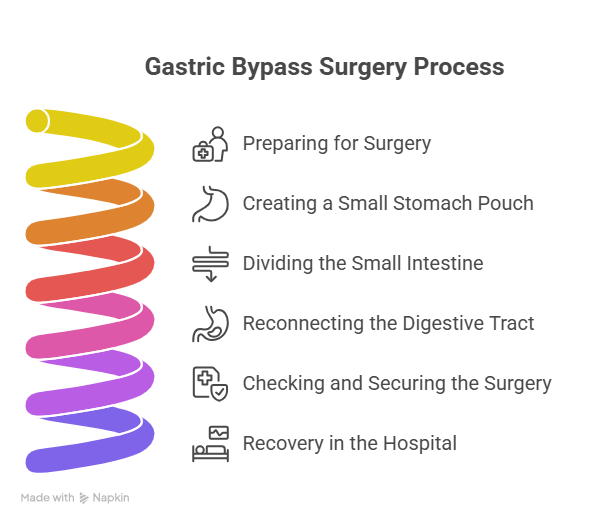
Let’s break down the surgery process into easy-to-understand steps:

1. Preparing for Surgery

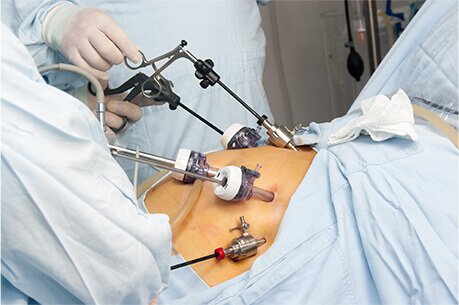
Before the actual surgery begins, the patient is taken to the operating room and given general anesthesia. This means you will be asleep throughout the procedure and won’t feel any pain. The medical team will also insert monitoring equipment to track your breathing, heart rate, and blood pressure. In most cases, surgeons use a laparoscopic technique, where small cuts are made in the abdomen and a tiny camera (laparoscope) is used to guide the surgery. This approach is less invasive than open surgery and usually allows faster recovery.

2. Creating a Small Stomach Pouch

Once anesthesia has taken effect, the surgeon focuses on making the stomach smaller. Using surgical staples, the stomach is divided into two sections. The upper part, which is made into a small pouch about the size of an egg, becomes the new functional stomach. This pouch can only hold a small amount of food, which means you will feel full quickly after eating just a little. The larger remaining portion of the stomach is sealed off but not removed from the body—it continues to produce digestive juices that help with digestion later in the process.

3. Dividing the Small Intestine

After the stomach pouch is created, the surgeon moves on to the small intestine. The small intestine is divided into two parts. The lower part of the intestine is brought up and attached directly to the new, smaller stomach pouch. This step is important because it allows food to “bypass” the rest of the stomach and the upper portion of the intestine. By skipping this section, the body absorbs fewer calories and nutrients, which promotes weight loss.

4. Reconnecting the Digestive Tract

The bypassed section of the small intestine, which is still attached to the larger portion of the stomach, is then connected further down the digestive tract. This connection ensures that digestive juices such as bile and enzymes from the pancreas can still mix with food. Even though food takes a shorter route, this reconnection is essential to allow proper digestion and absorption of nutrients, though at a reduced level.

5. Checking and Securing the Surgery

Once the new stomach pouch and intestinal connections are in place, the surgeon carefully checks everything to make sure there are no leaks and that blood flow is normal. The surgical tools and camera are removed, and the small cuts made during the laparoscopic procedure are closed with stitches or surgical glue. At this point, the surgery is complete. On average, the entire process takes about 2 to 4 hours, depending on the patient’s health and the complexity of the case.

6. Recovery in the Hospital

After the surgery, the patient is moved to a recovery area, where doctors and nurses closely monitor vital signs. Most patients spend 2–3 days in the hospital before going home. In the first few hours after surgery, you will only be allowed small sips of water. Gradually, your diet will progress from clear liquids to pureed food, then soft food, and finally small amounts of solid food over a few weeks.

Benefits of Gastric Bypass Surgery

Gastric bypass surgery is considered one of the most effective treatments for severe obesity and related health problems. Beyond just helping with weight loss, it can bring about long-term improvements in overall health and quality of life. Let’s explore the major benefits in detail:

1. Significant Weight Loss – Patients lose 60–80% of their excess weight over 1–2 years.

2. Improves Health Conditions – Diabetes, hypertension, and cholesterol often improve or even resolve.

3. Better Quality of Life – Increased mobility, higher confidence, and better participation in daily activities.

4. Long-Term Success – Compared to other weight-loss methods, gastric bypass offers sustainable results.

What Happens Right After the Surgery?

Right after gastric bypass surgery, patients are moved from the operating room to a recovery area where doctors closely monitor their condition. Here’s what typically happens:

Recovery Monitoring – You’ll wake up in a recovery room where doctors and nurses closely check your breathing, heart rate, and overall condition.

Pain Management – Some soreness or discomfort is normal, and pain medicines are given to help you feel comfortable.

Early Movement – You’ll be encouraged to get out of bed and walk within a few hours to improve blood flow and prevent blood clots.

Diet Progression – Initially, only small sips of water or clear liquids are allowed, gradually moving to pureed and soft foods.

Hospital Stay – Most patients stay in the hospital for about 2–3 days before being discharged.

Discharge Instructions – Before leaving, your doctor will explain diet changes, medications, and follow-up care.

Risks and Possible Side Effects

Risks of Gastric Bypass Surgery

Like any surgery, gastric bypass has some risks:

  • Short-term risks: bleeding, infection, and blood clots.
  • Long-term risks: nutritional deficiencies (iron, calcium, vitamin B12), bowel obstruction, ulcers.
  • Dumping Syndrome: a condition where food moves too quickly into the small intestine, causing nausea, diarrhea, and weakness.

Most risks can be managed with proper diet, lifestyle changes, and follow-up care.

Conclusion

Now that you know what happens during gastric bypass surgery, it’s clear that this procedure is a life-changing option for people struggling with obesity and related health issues. The surgery works by reducing the stomach size and rerouting the intestines, helping you eat less and absorb fewer calories.

With the guidance of skilled bariatric surgeons like Dr. Atul Peter’s, patients undergoing Gastric Bypass Surgery in Delhi can achieve long-term weight loss and improved health outcomes.

What happens during Gastric Bypass Surgery?

In this detailed guide, we’ll explain: “What happens during gastric bypass surgery?”including how it works, what you can expect before, during, and after surgery.

Book Your Appointment Today

Frequently Asked Questions

How long does Gastric Bypass Surgery take?

Usually, it takes 2 to 4 hours, depending on the patient’s condition and whether laparoscopic or open surgery is performed.

Is Gastric Bypass Surgery painful?

You won’t feel pain during the surgery because of anesthesia. After surgery, you may experience mild to moderate discomfort, which can be managed with medication.

How much weight can I lose after Gastric Bypass?

On average, patients lose 60–80% of their excess body weight within 12–18 months.

What foods can I eat after Gastric Bypass?

You’ll start with liquids, then soft foods, and later transition to small portions of regular healthy meals. Avoid sugary, fried, and fatty foods.

Is Gastric Bypass permanent?

Yes, the changes made during surgery are permanent. However, success depends on following a lifestyle and dietary changes.

Is Bariatric Surgery painful? {Doctor’s Guide}

Bariatric surgery is often a life-changing procedure for individuals suffering from obesity and related health conditions. This surgery can significantly improve a person’s quality of life by promoting weight loss and addressing obesity-related diseases, such as type 2 diabetes, hypertension, and sleep apnea. However, a common concern among patients considering this procedure is whether bariatric surgery is painful. This question is understandable, as any surgical procedure can evoke feelings of anxiety regarding potential discomfort and recovery.

Is Bariatric Surgery painful?

In this blog, we will address the question, ‘Is bariatric surgery painful?’ and discuss common concerns related to the surgery and recovery.

Book Your Appointment Today
In this blog, we will address the question, ‘Is bariatric surgery painful?’ and discuss common concerns related to the surgery, recovery, and the role of a Top Bariatric Surgeon in Delhi NCR in ensuring a smooth and pain-free experience. We will explore what to expect before, during, and after bariatric surgery, as well as the various pain management techniques that are used to minimize discomfort.

What is Bariatric Surgery?

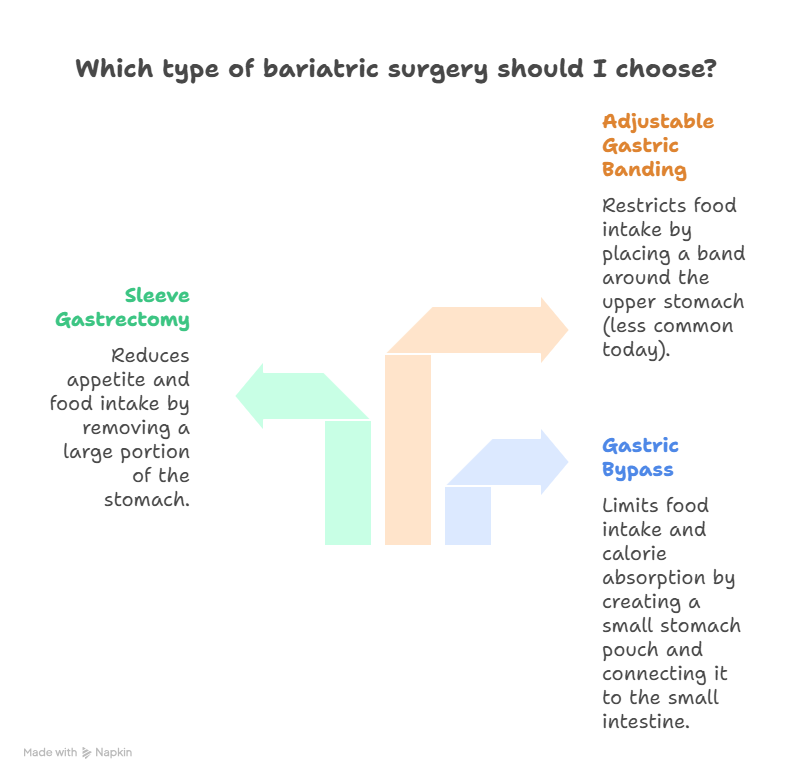
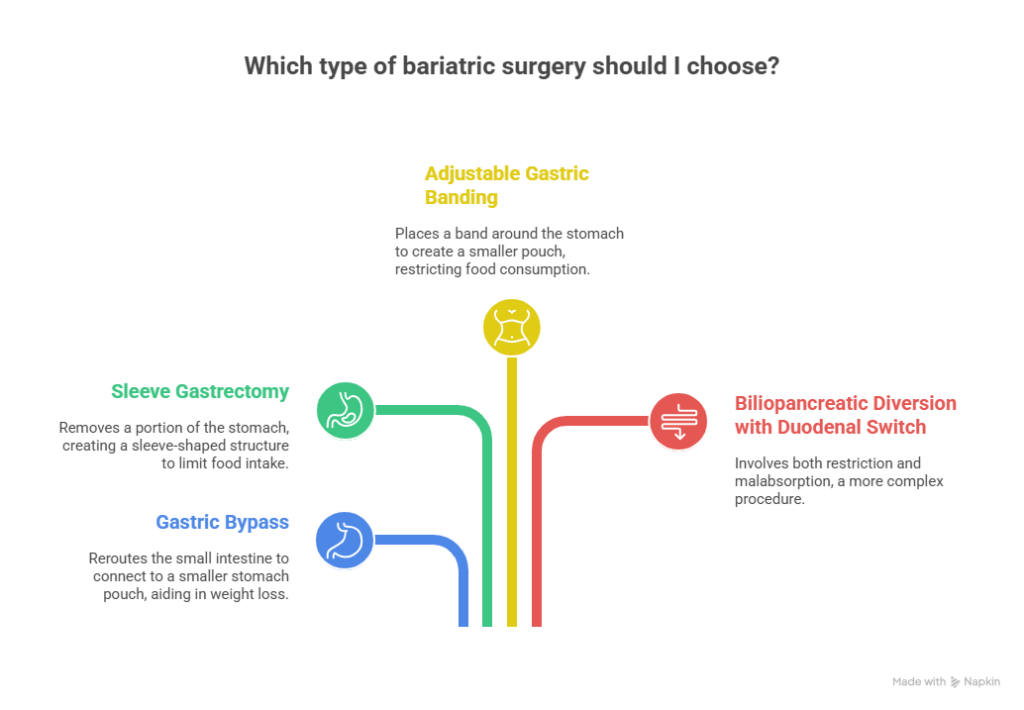
Bariatric surgery refers to a group of surgical procedures designed to help individuals with obesity lose weight. The surgery works by making changes to the digestive system, either by restricting the amount of food the stomach can hold or by altering the way the body absorbs food. There are several types of bariatric surgeries, including:

types of bariatric surgery
  1. Gastric Bypass: A procedure where the stomach is divided into a small upper pouch and a larger lower section, with the small intestine being rerouted to connect to the smaller pouch.
  2. Sleeve Gastrectomy: A procedure that removes a portion of the stomach, leaving a sleeve-shaped structure that restricts the amount of food that can be consumed.
  3. Adjustable Gastric Banding: A band is placed around the stomach to create a smaller pouch, limiting the amount of food that can be eaten.
  4. Biliopancreatic Diversion with Duodenal Switch: A more complex surgery involving both restriction and malabsorption.

Bariatric surgery is most effective for individuals who have not been successful with other weight-loss methods, such as diet and exercise, and who suffer from obesity-related health conditions.

Is Bariatric Surgery Painful?

The answer to the question, Is bariatric surgery painful, depends on various factors, such as the type of surgery, the individual’s pain tolerance, and the expertise of the surgical team. Generally, while some discomfort and pain are expected after the surgery, it is manageable with proper pain management strategies.

1. Pre-Surgery Preparation and Anesthesia

Before answering the question of Is bariatric surgery painful, it is important to understand that pain during surgery is minimized by the use of anesthesia. Anesthesia ensures that the patient is completely asleep and pain-free during the procedure. The anesthesiologist will carefully monitor the patient throughout the surgery to ensure that they remain comfortable and safe.

  • What to Expect: You will not feel any pain during the surgery itself due to the anesthesia. After waking up from the procedure, you may feel groggy, but any discomfort will be addressed by pain medications administered by your medical team.

2. Post-Surgery Discomfort and Pain

After the surgery, patients typically experience some level of discomfort, especially during the first few days. This discomfort is often related to the surgical incisions, gas used during the laparoscopic procedure, and the body adjusting to the changes made during surgery.

  • What to Expect: For the first few days, you may experience mild to moderate pain around the incision sites, which is common after any type of surgery. You may also experience abdominal bloating or discomfort due to the adjustment in your digestive system.
  • Pain Management: Pain management is a priority after bariatric surgery. You will be given prescription medications to manage the pain and make you more comfortable. These medications can be taken as needed for the first few days following surgery.

While some patients may experience more pain than others, the discomfort typically diminishes after the first few days as the body begins to heal. The use of laparoscopic (minimally invasive) techniques has also helped reduce the intensity of pain and the size of incisions, leading to quicker recovery times.

3. How Long Does the Pain Last?

The pain and discomfort after bariatric surgery typically subside within a few days to one week. The first few days after surgery are usually the most uncomfortable, but with proper pain management, the discomfort becomes manageable. By the end of the first week, most patients can return to light activities and experience minimal pain.

  • What to Expect: In the first week after surgery, you may still experience some tightness or soreness in the abdomen. You may also have difficulty moving around or lifting heavy objects. However, these symptoms improve quickly as the healing process progresses.

For more complex surgeries, such as gastric bypass or duodenal switch, recovery may take slightly longer, but the pain typically becomes more manageable as time passes. It’s important to follow your surgeon’s instructions regarding post-operative care and pain management.

4. Factors That Influence Pain During Recovery

 Factors That Influence Pain During Recovery of Bariatric Surgery

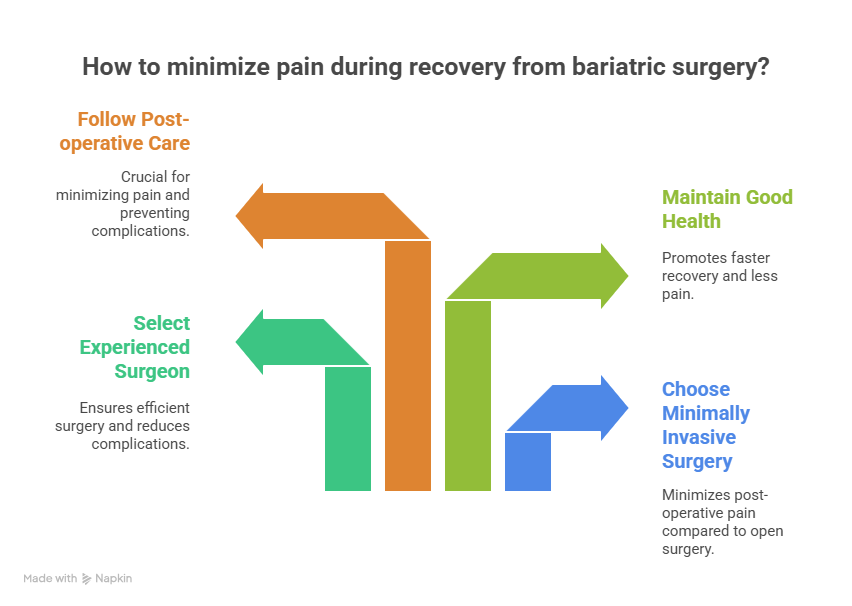
Several factors influence the level of pain and recovery time after bariatric surgery:

  • Type of Surgery: As mentioned earlier, minimally invasive procedures like laparoscopic sleeve gastrectomy tend to have less post-operative pain compared to open surgery.
  • Surgeon’s Experience: A skilled Bariatric surgeon can minimize the risks of complications and ensure that the surgery is performed efficiently, leading to less pain during recovery.
  • Patient’s Health: Patients who are in good health and have a positive attitude toward recovery tend to experience less pain and recover faster.
  • Post-operative Care: Following your surgeon’s instructions regarding wound care, diet, and activity restrictions is crucial for minimizing pain and preventing complications.

5. Long-Term Discomfort and Complications

While the pain from surgery generally decreases after the first few weeks, some patients may experience long-term discomfort as their body adjusts to the new digestive system. This is often due to changes in eating habits, smaller stomach capacity, and the body’s adaptation to weight loss.

  • What to Expect: Some patients may experience gas, bloating, or digestive issues as they adjust to their new eating habits. It’s important to maintain regular follow-ups with your Best Bariatric Surgeon in Delhi NCR to ensure that you are healing properly and to address any long-term discomfort.

6. Risks and Complications

While bariatric surgery is generally safe, as with any surgical procedure, there are risks involved. Some complications can lead to increased pain or discomfort during recovery, including:

  • Infection: If the surgical site becomes infected, it can cause significant pain and may require additional medical treatment.
  • Leaks: In some cases, especially with gastric bypass surgery, leaks can occur in the digestive tract, leading to severe pain, fever, and other symptoms. This is a rare but serious complication.
  • Blood clots: Blood clots can cause swelling and pain, and may require treatment to prevent further complications.

It is important to monitor for signs of complications and contact your surgeon immediately if you experience any unusual pain, fever, or swelling.

How to Manage Pain After Bariatric Surgery

To ensure a smooth recovery and minimize discomfort, there are several strategies you can use to manage pain after bariatric surgery:

  1. Follow post-operative care instructions: It’s essential to follow your surgeon’s advice on wound care, medication use, and activity restrictions.
  2. Use prescribed pain medications: Your Bariatric Surgeon will prescribe pain medications to help manage your discomfort in the initial days following surgery. Taking these medications as directed will ensure that the pain is under control.
  3. Rest and take it easy: Allow your body to heal by avoiding strenuous activities and getting plenty of rest.
  4. Stay hydrated and eat nutrient-rich foods: Staying hydrated and following a healthy diet will help speed up the recovery process and reduce discomfort.
  5. Engage in light physical activity: Once your surgeon gives you the go-ahead, engage in light activities such as walking to promote circulation and prevent complications.

Is Bariatric Surgery painful?

In this blog, we will address the question, ‘Is bariatric surgery painful?’ and discuss common concerns related to the surgery and recovery.

Book Your Appointment Today
Conclusion

In conclusion, is bariatric surgery painful? While some discomfort and pain are to be expected after bariatric surgery, the level of pain is generally manageable with proper pain management techniques. The recovery period can vary depending on the type of surgery, the patient’s overall health, and the surgeon’s skill. Most patients find that the pain decreases significantly within the first few days and that they can return to normal activities within a few weeks.

If you are considering bariatric surgery, it’s essential to consult with an experienced bariatric Surgeon like Dr. Atul Peter’s, who can provide expert care, guide you through the process, and ensure that your recovery is as smooth as possible. Dr. Atul Peters, with his extensive expertise in bariatric surgery, is dedicated to providing the best care and ensuring that patients are comfortable throughout their weight loss journey.

Frequently Asked Questions

1. Is Bariatric Surgery painful?

Most patients feel some pain or discomfort after bariatric surgery, especially in the first 24–72 hours. Modern techniques (laparoscopic/robotic) usually cause less pain than open surgery, and pain is well-managed with medications and other measures.

2. When does the pain start, and how long does it last?

Pain typically begins right after surgery and is strongest in the first 1–3 days. It usually improves steadily over 1–2 weeks, though mild soreness or tightness around incisions can last several weeks.

3. Which parts of the body hurt after bariatric surgery?

Common sources of pain are the small incision sites (abdomen), shoulder pain from gas used during laparoscopy (referred pain), and a general soreness or bloated feeling in the abdomen.

4. Is laparoscopic bariatric surgery less painful than open surgery?

Yes — laparoscopic and robotic approaches use small incisions and usually cause less immediate pain, shorter hospital stays, and faster recovery compared with open surgery.

5. Can diet changes after surgery cause pain?

Yes — eating too much, too quickly, or consuming certain foods can cause cramping, nausea, or reflux-like pain. Following the staged post-op diet (liquids ? purees ? soft ? solid) helps minimize this.

How long does Laparoscopic Hernia Surgery take?

When someone is diagnosed with a hernia, surgery often becomes the most effective treatment to repair the weakened muscle and prevent complications. With the advancement of medical technology, laparoscopic hernia surgery has become a preferred choice for many patients. But one of the most common questions patients ask before undergoing surgery is – “How long does laparoscopic hernia surgery take?”

Generally, the laparoscopic hernia surgery time is shorter than traditional open surgery. On average, it takes around 30 minutes to 1.5 hours, depending on the type of hernia, its size, and whether one or both sides are being treated. However, every patient is different, and factors such as overall health, the complexity of the hernia, and the surgeon’s expertise play a role in determining the exact time.

How long does Laparoscopic Hernia Surgery take?

Laparoscopic Hernia Surgery time is shorter than traditional open surgery. On average, it takes around 30 minutes to 1.5 hours.

Book Your Appointment Today
If you are planning for Hernia Surgery in Delhi, consulting an experienced surgeon like Dr. Atul Peter’s can help you get clear guidance, accurate estimates, and the best surgical outcomes.

Understanding Laparoscopic Hernia Surgery

Laparoscopic hernia surgery is a minimally invasive procedure that uses tiny incisions and advanced surgical instruments. Instead of making a large cut like in open surgery, surgeons use a laparoscope (a thin tube with a camera) to view the hernia and perform the repair.

This approach has become popular because of its benefits:

  • Smaller incisions and less visible scars
  • Faster recovery compared to open surgery
  • Reduced post-surgery pain
  • Shorter hospital stay, often allowing patients to go home the same day

While the laparoscopic inguinal hernia surgery time may vary slightly depending on the complexity, most procedures are completed quickly and efficiently. The surgeon places a mesh to strengthen the weakened muscle wall, which reduces the risk of recurrence.

How Long Does Laparoscopic Hernia Surgery take?

The actual hernia laparoscopic surgery time usually ranges between 30 minutes and 90 minutes. In straightforward cases, such as a small inguinal hernia, the procedure may be completed in less than half an hour. However, in more complex cases, like recurrent hernias or bilateral (both sides) hernias, it may take closer to 1.5 hours.

Here’s a quick breakdown:

  • Unilateral Inguinal Hernia (one side): 30–45 minutes
  • Bilateral Inguinal Hernia (both sides): 45–75 minutes
  • Recurrent or Complex Hernia: 60–90 minutes

One of the biggest advantages of this surgery is that, despite the variation in duration, patients generally spend less time in the hospital. Most people are discharged the same day or within 24 hours.

Factors Affecting Hernia Laparoscopic Surgery Time

Factors Affecting Hernia Laparoscopic Surgery Time

1. Type of Hernia

The type of hernia plays a key role in determining the surgery duration. Inguinal hernias are usually simpler and take less time to repair, while larger incisional or umbilical hernias may require more careful handling, which adds to the overall time.

2. Complexity of the Case

A straightforward first-time hernia repair is often faster than treating a recurrent hernia. If the hernia has reappeared after a previous surgery, scar tissue and weakened muscles can make the procedure more complex and time-consuming.

3. Single vs. Bilateral Repair

When a patient has a hernia on just one side, the operation is usually completed quickly. However, in bilateral hernia cases, surgeons must repair both sides, which increases the laparoscopic hernia surgery time compared to a single repair.

4. Patient’s Health Condition

The overall health of the patient influences how long surgery takes. Conditions such as obesity, diabetes, or heart problems require extra care and monitoring during the procedure, which may slightly extend the surgery time.

5. Experience of the Surgeon

An experienced surgeon like Dr. Atul Peter’s can perform the surgery more efficiently, reducing time without compromising safety. Less experienced surgeons may take longer as they proceed more cautiously, especially in complicated cases.

Step-by-Step Procedure of Laparoscopic Hernia Surgery

1. Preparation and Anesthesia

Before the surgery begins, the patient is given general anesthesia to ensure they are completely asleep and pain-free. The surgical area is cleaned and sterilized, and the patient is carefully positioned for the procedure.

2. Creating Small Incisions

The surgeon makes 3–4 small incisions in the abdomen, each about half an inch long. These incisions serve as entry points for the laparoscope (camera) and other surgical instruments.

3. Insertion of Laparoscope and Instruments

A thin tube with a camera, called a laparoscope, is inserted through one of the incisions. This camera projects a magnified view of the hernia on a monitor, allowing the surgeon to see the affected area clearly.

4. Identifying and Accessing the Hernia

The surgeon carefully identifies the hernia sac and the weakened abdominal wall. Carbon dioxide gas is used to inflate the abdominal cavity slightly, giving more space to operate and better visibility inside.

5. Placing the Mesh

A special surgical mesh is inserted through the incisions and positioned over the weakened muscle area. This mesh acts as a reinforcement, preventing the hernia from recurring in the future.

6. Closing the Incisions

Once the mesh is secured, the instruments are removed, and the small incisions are closed using stitches or surgical glue. These tiny cuts heal quickly and leave minimal scarring compared to open surgery.

Hernia Surgery Recovery Time (Laparoscopic)

Laparoscopic Hernia Surgery Recovery Time

One of the biggest reasons patients prefer laparoscopic hernia repair is the faster recovery time. Unlike open surgery, which requires larger cuts, laparoscopic surgery involves only small incisions. This means the body heals quickly and with less pain.

On average, the laparoscopic Hernia Surgery in Delhi recovery time is around 1–2 weeks for light activities and 3–4 weeks for full recovery. Many patients can walk around within a few hours after surgery and return to desk jobs within a week. However, heavy lifting or strenuous exercise is usually restricted for 4–6 weeks to allow the mesh and muscles to heal properly.

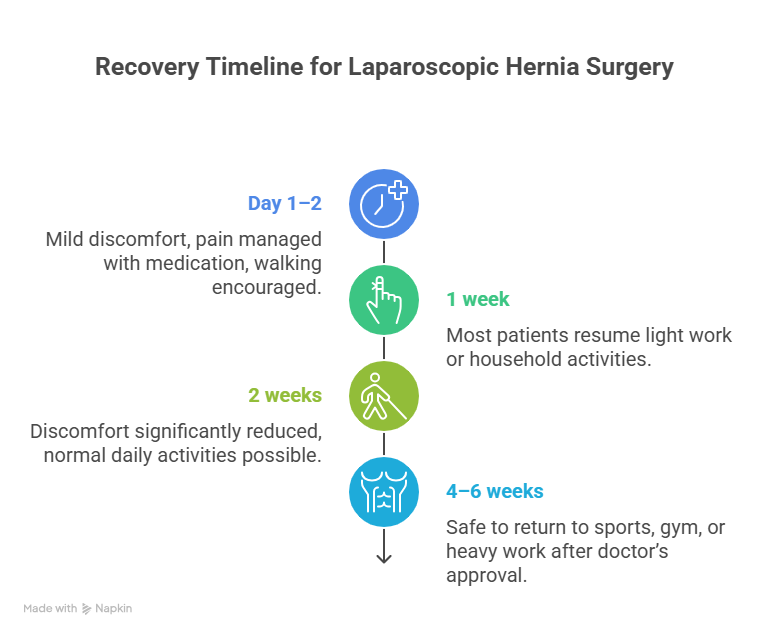
Typical recovery timeline:

  • Day 1–2: Mild discomfort, pain managed with medication, walking encouraged.
  • 1 week: Most patients resume light work or household activities.
  • 2 weeks: Discomfort significantly reduced, normal daily activities possible.
  • 4–6 weeks: Safe to return to sports, gym, or heavy work after doctor’s approval.

Benefits of Laparoscopic Hernia Surgery

One of the biggest reasons patients prefer laparoscopic hernia surgery is the wide range of benefits it offers. Since the procedure is minimally invasive, patients experience less post-operative pain compared to open surgery. The smaller cuts also mean minimal scarring, making the procedure cosmetically appealing.

Another major benefit is the faster return to daily life, as many patients can get back to work within a short period. The reduced risk of infection, quicker healing, and lower chances of hernia recurrence make laparoscopic surgery a safe and effective choice for long-term health.

Life After Laparoscopic Hernia Surgery

Life after laparoscopic hernia surgery is generally smooth, with most patients noticing quick improvement in their comfort and mobility. In the first few days, mild pain or discomfort around the incision sites is common, but it usually fades quickly with medication. Most people can return to light activities within a few days and resume regular routines in about two weeks.

However, patients should avoid lifting heavy weights, straining, or engaging in intense exercise until their surgeon confirms it is safe—usually after 4–6 weeks. With proper care and follow-up checkups, patients can expect a strong recovery and long-lasting results, making the procedure a life-changing step toward better health.

How long does Laparoscopic Hernia Surgery take?

Laparoscopic Hernia Surgery time is shorter than traditional open surgery. On average, it takes around 30 minutes to 1.5 hours.

Book Your Appointment Today
Final Thoughts

Laparoscopic hernia surgery has become the gold standard for hernia treatment because of its efficiency, shorter recovery time, and minimally invasive nature. For most patients, the procedure takes between 30 minutes to 90 minutes, and recovery is much faster compared to traditional open surgery. While the exact hernia laparoscopic surgery time depends on factors like the type of hernia, the complexity of the case, and overall patient health, the results are generally long-lasting and highly successful.

Choosing an expert surgeon is equally important to ensure safety and the best possible outcomes. For those considering Hernia Surgery in Delhi, Dr. Atul Peter’s provides world-class expertise, advanced surgical techniques, and comprehensive aftercare. With his guidance, patients can expect a smooth surgery, minimal downtime, and a quicker return to normal life.

Frequently Asked Questions

How long does laparoscopic hernia surgery take?

On average, laparoscopic hernia surgery takes 30 minutes to 1.5 hours, depending on the type of hernia and its complexity. Simple cases are quicker, while recurrent or bilateral hernias take longer.

What is the Recovery time after laparoscopic hernia surgery?

Most patients return to light activities within 3–5 days and normal routines in 1–2 weeks. Complete healing of internal tissues usually takes about 4–6 weeks.

Is Laparoscopic Hernia Surgery Painful?

Patients experience less pain compared to open surgery. Some discomfort is normal in the first few days, but it is easily managed with prescribed painkillers.

How safe is Laparoscopic Hernia surgery?

It is generally very safe when performed by an experienced surgeon. Risks like infection, bleeding, or recurrence are rare but possible, which is why choosing the right surgeon is important.

Can a Hernia come back after Laparoscopic Surgery?

The chances of recurrence are very low, especially when a mesh is used for repair. However, lifestyle factors such as heavy lifting or obesity can increase the risk.

When can I resume exercise after Hernia surgery?

Light walking is encouraged within a few days, but heavy workouts or weightlifting should be avoided until your surgeon gives clearance—usually after 4–6 weeks.

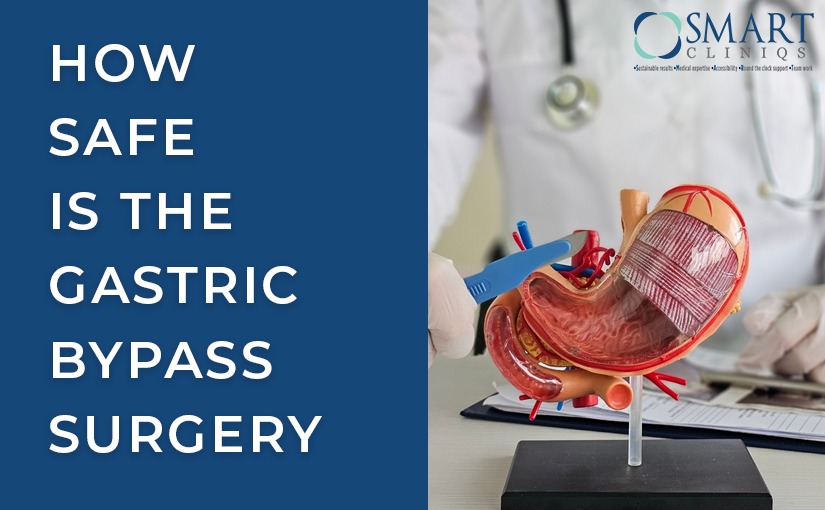
How safe is the Gastric Bypass Surgery?

Obesity is one of the leading health challenges in today’s world, and for many people, dieting and exercise alone are not enough to achieve lasting weight loss. In such cases, bariatric surgery becomes a life-changing option. Among the different types of bariatric procedures, gastric bypass surgery is one of the most common and effective. But many patients ask: “How safe is the gastric bypass surgery?”

The good news is that gastric bypass surgery has been performed successfully worldwide for decades, with thousands of patients benefiting from long-term weight loss and improvement in obesity-related conditions. In cities like Delhi, experienced specialists such as Dr. Atul Peter’s, a leading Bariatric Surgeon in Delhi, have made this surgery much safer with advanced techniques and strict medical standards.

How safe is the Gastric Bypass Surgery?

To understand safety, you first need to know what gastric bypass actually does. This surgery is like reprogramming the body’s digestion.

Book Your Appointment Today

Understanding Gastric Bypass Surgery

To understand safety, you first need to know what gastric bypass actually does. This surgery is like reprogramming the body’s digestion. Instead of food traveling the usual long path, it takes a shortcut, leading to fewer calories being absorbed.

Here’s how it works in simple terms:

  1. The surgeon creates a small pouch at the top of the stomach. This pouch becomes the new “mini-stomach.”
  2. That pouch is then connected directly to a section of the small intestine.
  3. As a result, food bypasses most of the stomach and the first part of the intestine.

This means two things happen at once — you feel full with less food, and your body absorbs fewer calories. For someone struggling with obesity, it is like pressing a reset button.

How Safe is the Gastric Bypass Surgery?

Whenever a patient asks, “How safe is the gastric bypass surgery?”, doctors often compare it with other common procedures. Believe it or not, the risks of gastric bypass are almost the same as gallbladder removal or knee replacement surgery. In fact, the mortality rate is less than 0.3% worldwide — a figure much lower than most people expect.

The real reason it’s considered safe today is because of laparoscopic surgery. Instead of making a large cut, surgeons operate using tiny incisions and a camera. This reduces pain, lowers infection risk, and helps patients get back on their feet in days instead of weeks.

Take, for example, a 42-year-old patient in Delhi who had diabetes for 10 years. After undergoing Gastric Bypass Surgery in Delhi, not only did he lose 35 kilos, but his blood sugar levels returned to normal within months. His only regret? That he didn’t do it sooner.

Factors that Influence Safety

Now, while the procedure is safe overall, not every patient walks into surgery with the same level of risk. Safety often depends on a mix of medical conditions, lifestyle factors, and the skill of the surgeon.

For instance, someone with uncontrolled high blood pressure, sleep apnea, and heart disease may face a slightly higher risk compared to a younger, healthier patient. But this doesn’t mean surgery is unsafe — it simply means extra precautions are needed.

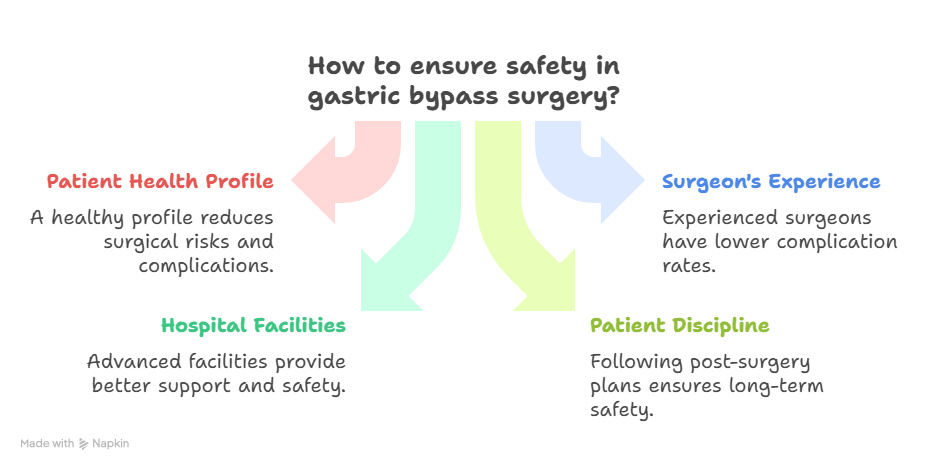
Here are some things that matter most:

  • Patient’s health profile – Heart, lungs, liver, and diabetes control play a major role.
  • Surgeon’s experience – Studies show complication rates are far lower with highly trained surgeons. Choosing experts like Dr. Atul Peter’s makes a huge difference.
  • Hospital facilities – Advanced operating theaters, ICU backup, and experienced staff add an extra layer of safety.
  • Patient discipline – Surgery is only step one. Following the right diet, exercise, and medication plan afterward is what ensures long-term safety.

Think of it like driving a car: the car itself may be safe, but the driver’s skill and how carefully you follow the rules matter too. In bariatric surgery, the “driver” is the surgeon, and the “rules” are the lifestyle changes you commit to.

Short-Term Risks and Complications

No surgery comes without risks, and gastric bypass is no exception. But the key thing to remember is that most of the complications are short-term and manageable when the surgery is done in a reputable center.

Some patients may experience:

  • Mild pain or discomfort – Common in the first few days, usually controlled with medicines.
  • Nausea or vomiting – The stomach needs time to adjust to its new size.
  • Infection at incision sites – Rare, but possible if stitches are not cared for properly.
  • Bleeding or leakage – Very uncommon, but surgeons keep a close watch in the first 24–48 hours.

Think of these as the body’s natural response to a big change. With modern laparoscopic methods and constant monitoring, these issues are handled before they become serious. In fact, most patients undergoing Gastric Bypass Surgery in Delhi walk out of the hospital in 3–5 days with minimal discomfort.

Long-Term Safety and Benefits

Here’s where gastric bypass truly shines. While the short-term risks are minor, the long-term benefits are life-changing. For many patients, the surgery not only reduces weight but also gives them a second chance at life.

Benefits over time include:

  • Sustainable weight loss – Most people lose 60–80% of excess weight within two years.
  • Better control of diabetes – Many stop insulin or tablets within months.
  • Reduced heart risk – Blood pressure and cholesterol levels improve.
  • Relief from joint pain – Less body weight means easier mobility.
  • Better sleep and breathing – Sleep apnea often disappears.
  • Boost in confidence and energy – Patients report a more active and fulfilling lifestyle.

To put it simply, the safety of gastric bypass should not only be measured in terms of surgical risks, but also in the years of healthy life gained afterward.

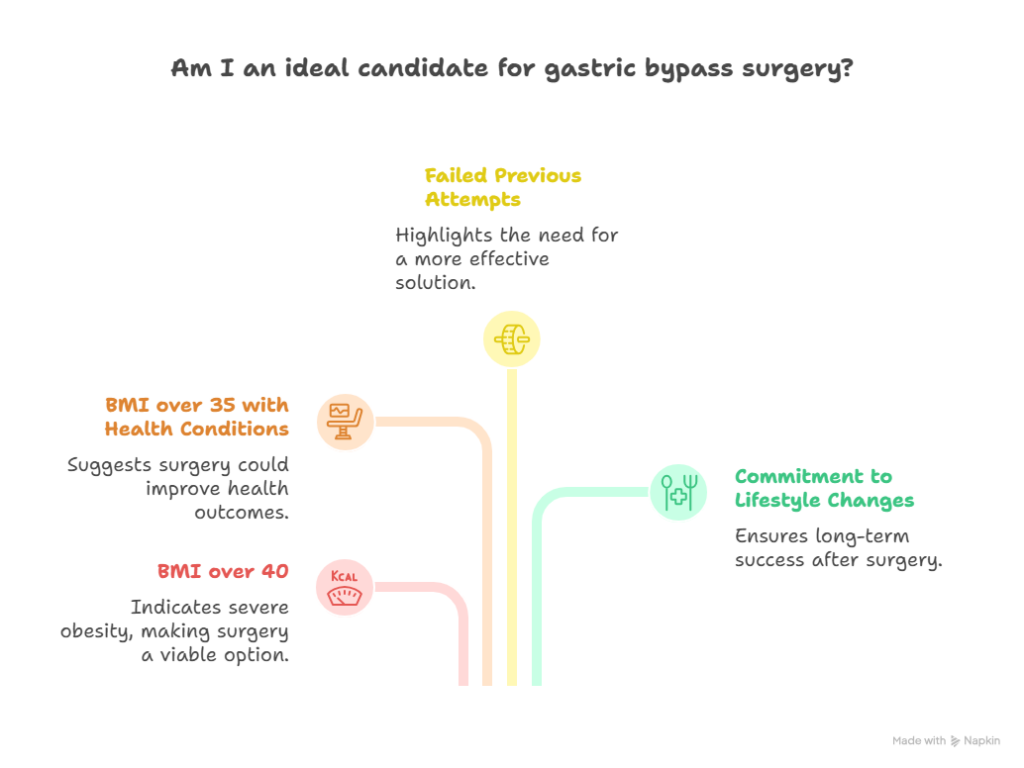
Who is an Ideal Candidate for Gastric Bypass Surgery?

Not everyone struggling with weight is advised to undergo gastric bypass. Doctors carefully evaluate each patient before recommending the surgery. The question isn’t just “how safe is the gastric bypass surgery”, but also “is this the right surgery for me?”

Who is an Ideal Candidate for Gastric Bypass Surgery

Ideal candidates often include:

  • People with a BMI over 40 (severe obesity).
  • People with a BMI over 35, plus health conditions like diabetes, hypertension, or sleep apnea.
  • Patients who tried diet, exercise, and medicines without lasting results.
  • Individuals are motivated to follow a lifelong diet and exercise plan after surgery.

For example, a 36-year-old woman weighing 125 kg with uncontrolled diabetes may benefit greatly, while a 25-year-old with just mild weight gain may be advised against it.

How to Ensure a Safe Recovery After Surgery?

Surgery is only the first step. The true success of gastric bypass lies in how carefully patients follow recovery guidelines. A safe recovery doesn’t just depend on the surgeon — it also depends on the patient’s lifestyle choices.

Ways to ensure safe recovery:

  • Follow the diet plan – Start with liquids, then soft foods, and gradually move to solids.
  • Stay active – Light walking speeds up recovery and prevents blood clots.
  • Take prescribed supplements – Vitamins and minerals are essential since absorption is reduced.
  • Protect the incision site – Keep it clean and dry to avoid infection.
  • Attend follow-up visits – Regular checkups with your surgeon help track progress and catch any issues early.

Do’s and Don’ts After Gastric Bypass Surgery

Adjusting your lifestyle after surgery is just as important as the operation itself. Patients often ask not just “how safe is the gastric bypass surgery?” but also “what should I do afterward to stay safe?”

? Do’s After Gastric Bypass Surgery ? Don’ts After Gastric Bypass Surgery
Eat small, frequent meals instead of large portions. Don’t consume carbonated or sugary drinks.
Drink plenty of water slowly throughout the day. Don’t lift heavy objects in the first few weeks.
Take multivitamins and supplements as prescribed. Don’t skip follow-up appointments with your surgeon.
Exercise regularly, starting with light walking. Don’t smoke or drink alcohol as they delay healing.
Listen to your body and stop eating once you feel full. Don’t rush into solid foods too early — allow healing time.

Final Thoughts

When patients ask “how safe is the gastric bypass surgery?”, the answer is not a simple yes or no — it’s about balance. Like any operation, there are risks. But when compared to the dangers of untreated obesity — diabetes, heart disease, high blood pressure, and reduced lifespan — the surgery is often the safer choice in the long run.

In fact, most patients experience dramatic improvements in health, mobility, and confidence. The key lies in choosing the right surgeon and following post-surgery instructions. For those considering Gastric Bypass Surgery in Delhi, experts like Dr. Atul Peter’s provide not only surgical expertise but also long-term guidance to ensure safety and results.

Frequently Asked Questions

How safe is the gastric bypass surgery compared to other surgeries?

Gastric bypass is as safe as common surgeries like gallbladder removal, with a mortality rate of less than 0.3% when done by experienced surgeons.

Who should not go for gastric bypass surgery?

People with very low BMI, untreated heart/lung problems, or those unwilling to follow lifestyle changes may not be suitable candidates.

How long does it take to recover after Gastric bypass?

Most patients return to normal activities within 2–4 weeks, though complete healing and adjustment to diet may take a few months.

Can Gastric Bypass cure diabetes?

For many patients, type 2 diabetes goes into remission after surgery, meaning they no longer need insulin or medicines.

Are the results of Gastric Bypass permanent?

Yes, but only if patients commit to lifelong changes in diet, supplements, and exercise. Neglecting lifestyle changes may lead to partial weight regain.

Is Gastric Bypass surgery painful?

Mild discomfort is normal in the first few days, but pain is well-managed with medicines. Most patients say it is less painful than they expected.


How does Bariatric Surgery reverse Diabetes? {Complete Guide}

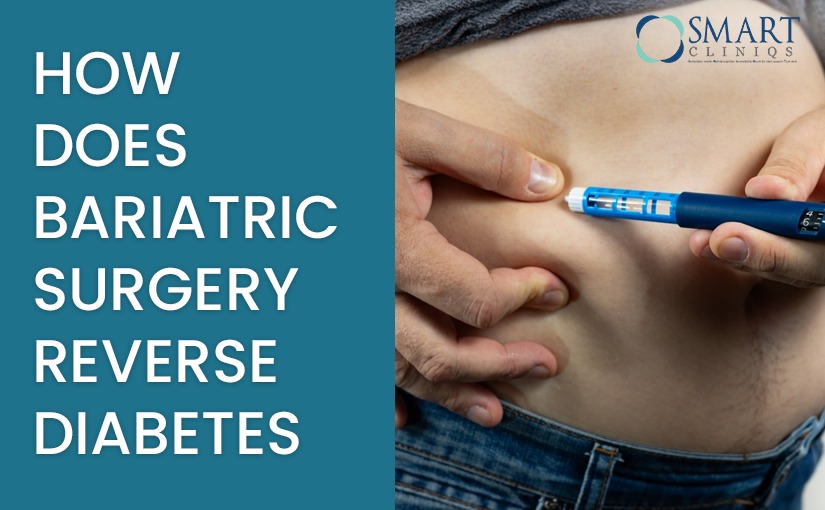
Diabetes, especially type 2, has become one of the most common health conditions worldwide. Millions of people live with high blood sugar levels, relying on daily medicines or insulin injections. While lifestyle changes like diet and exercise help, many patients struggle to achieve long-term control. This is where bariatric surgery has emerged as a game-changer. But many wonder: how does bariatric surgery reverse diabetes?

Studies from around the world show that bariatric surgery reverses type 2 diabetes in a large percentage of patients. In some cases, blood sugar levels return to normal within days after surgery, even before major weight loss happens. Specialists like Dr. Atul Peter’s, who is one of the most trusted experts for Bariatric Surgery in Delhi, have seen hundreds of patients experience freedom from diabetes after undergoing these procedures.

How does Bariatric Surgery reverse Diabetes?

So, how does bariatric surgery reverse diabetes? The answer lies in a powerful mix of hormonal changes and sustained weight loss.

Book Your Appointment Today

Understanding Diabetes

To understand how surgery helps, it’s important to first know the connection between obesity and diabetes. Type 2 diabetes happens when the body either does not make enough insulin or cannot use it effectively. Obesity, especially fat around the belly, makes the body resistant to insulin. This leads to high blood sugar levels and long-term complications like kidney disease, nerve damage, and heart problems.

How obesity contributes to diabetes:

  • Fat cells release chemicals that make it harder for insulin to work.
  • Excess fat in the liver and muscles blocks normal sugar absorption.
  • Overeating and poor metabolism create constant pressure on the pancreas.

This is why losing weight is often the first step in controlling diabetes. But when diet and exercise fail, surgery offers another path.

What is Bariatric Surgery?

Bariatric surgery is a medical procedure designed to help people lose weight when diet and exercise alone do not work. It is not just about reducing body size — it also improves health conditions linked to obesity, including type 2 diabetes.

different types of bariatric surgery

There are different types of bariatric surgery, but the most common are:

  • Gastric Bypass Surgery – A small pouch is created in the stomach and directly connected to the small intestine, which limits how much food you eat and how many calories you absorb.
  • Sleeve Gastrectomy – A large portion of the stomach is removed, leaving a banana-shaped pouch. This reduces appetite and food intake.
  • Adjustable Gastric Banding – A band is placed around the upper part of the stomach to restrict food intake (less commonly used today).

Bariatric surgery is performed laparoscopically (through tiny incisions), which makes it safer and less painful than traditional open surgery.

How does Bariatric Surgery Reverse Diabetes?

Here comes the big question: how does bariatric surgery reverse diabetes? It works in three powerful steps:

1. Immediate Hormonal Reset

Within days of surgery, the gut releases more “good hormones” like GLP-1 that improve insulin sensitivity. This happens even before patients lose any weight, which is why many stop insulin right after surgery.

2. Reduced Sugar Absorption

Because food bypasses parts of the intestine (in gastric bypass), less sugar enters the bloodstream. This means the body doesn’t struggle with sugar overload anymore.

3. Long-Term Weight Loss

As the patient loses 20–40 kilos over the months, insulin resistance melts away with the fat. The body starts responding to insulin normally again, leading to long-term diabetes remission.

So when people ask, “Can bariatric surgery reverse diabetes?”, the answer is yes — through a combination of hormonal changes, reduced calorie absorption, and weight loss.

Bariatric Surgery vs. Diabetes Medications

For years, type 2 diabetes has been managed with tablets and insulin. These medicines help lower blood sugar, but they don’t fix the root cause: insulin resistance. That’s why many patients keep increasing their doses over time.

Now, compare this with bariatric surgery and reversal of diabetes:

Aspect Medications Bariatric Surgery
Effect Controls sugar temporarily Resets hormones + reduces insulin resistance
Duration Lifelong usage Long-term, sometimes permanent remission
Side effects Weight gain, low sugar episodes, dependency Minimal if monitored properly
Cost over years Medicines for decades One-time surgery + supplements

Long-Term Benefits of Bariatric Surgery on Diabetes

The real strength of bariatric surgery lies in its long-lasting impact. While medicines keep sugar under control only as long as you take them, surgery often puts diabetes into remission for years.

Here’s what studies and patient journeys show:

  • Sustained sugar control: Many patients maintain normal blood sugar without insulin or tablets even 10–15 years after surgery.
  • Better heart health: Lower blood pressure and cholesterol reduce heart attack risk.
  • Improved kidney and eye health: Diabetes complications like nephropathy and retinopathy improve or stop progressing.
  • Higher quality of life: With weight loss and diabetes reversal, patients report more energy, mobility, and confidence.

Possible Risks & Safety Concerns

Now, let’s be realistic. Just like any operation, bariatric surgery carries risks. The good news is that serious complications are rare, especially when the procedure is done by an experienced surgeon. But patients must still be aware.

Short-Term Risks Long-Term Risks
Mild pain or nausea in the first few days Vitamin and mineral deficiencies (supplements required)
Infection at incision or surgical site Small risk of weight regain if diet is not followed
Rare cases of bleeding or leakage Need for lifelong follow-up and medical monitoring
Temporary difficulty adjusting to new eating habits Possible digestive changes (dumping syndrome, diarrhea)

Who Should Consider Bariatric Surgery for Diabetes?

Bariatric surgery isn’t for everyone with diabetes — it’s usually meant for people who are overweight or obese and have been struggling to control their blood sugar despite medicines and lifestyle changes. Doctors carefully screen patients before recommending surgery.

You may be a good candidate if:

  • Your BMI is 35 or above with type 2 diabetes.
  • You have diabetes-related health issues like high blood pressure or sleep apnea.
  • You have tried diets, exercise, and medicines for years with little success.
  • You are committed to following a lifelong healthy lifestyle after surgery.

In fact, research shows that bariatric surgery reverses type 2 diabetes most effectively in people who undergo it earlier in their disease course. This means if you’ve had diabetes for 2–5 years, the chances of remission are higher than if you’ve had it for 15–20 years.

Life After Bariatric Surgery: What Changes?

Life after surgery is different — but in a good way. Patients who once relied on insulin or daily tablets often find themselves free of diabetes medication. However, success depends on lifestyle adjustments.

What changes after surgery?

  • Diet: Smaller, healthier meals; no overeating.
  • Energy: More stamina and the ability to do physical activities.
  • Health: Lower sugar, improved blood pressure, better cholesterol.
  • Routine: Regular follow-ups and supplements become part of daily life.

One of the most rewarding changes is emotional well-being. Many patients share how they no longer feel “controlled by diabetes.” Instead, they feel empowered, active, and hopeful.

How does Bariatric Surgery reverse Diabetes?

So, how does bariatric surgery reverse diabetes? The answer lies in a powerful mix of hormonal changes and sustained weight loss.

Book Your Appointment Today

Final Thoughts

So, how does bariatric surgery reverse diabetes? The answer lies in a powerful mix of hormonal changes, reduced calorie absorption, and sustained weight loss. For many patients, this surgery does what years of medicines could not — it restores normal sugar control and, in many cases, completely stops the need for insulin or tablets.

But here’s the key: it’s not a shortcut. Patients must commit to healthy eating, regular exercise, and follow-up care for lasting results. The safety and success also depend on choosing an experienced surgeon. For those exploring Bariatric Surgery in Delhi, experts like Dr. Atul Peter’s combine skill, technology, and long-term guidance to ensure patients achieve not just weight loss, but true freedom from diabetes.

Frequently Asked Questions

Can Bariatric Surgery reverse Diabetes permanently?

Yes, many patients go into long-term remission. However, success depends on patient commitment to lifestyle changes and regular medical follow-up.

How soon after surgery does diabetes improve?

In many cases, sugar levels drop within days of surgery — even before major weight loss happens — due to hormonal changes in the gut.

Is Bariatric Surgery safe for Diabetic patients?

Yes, when performed by an experienced surgeon. Risks are minimal compared to the long-term complications of uncontrolled diabetes.

Do all Diabetic patients qualify for surgery?

No. It is usually recommended for people with a BMI of 35+ or those with obesity-related health problems.

Will I still need medicines after surgery?

Some patients may need small doses of medicines, but most experience a major reduction or complete stop of insulin/tablets.

Which is better — medicines or surgery for diabetes?

Medicines control diabetes temporarily, but bariatric surgery reverses type 2 diabetes for the long term in many patients.