
Hiatal Hernia: Symptoms, How It Differs from GERD and When Surgery Is Needed
Many people hear “hernia” and picture a bulge in the groin or near the navel. A hiatal hernia is different. It happens inside the body, so there is nothing to see or feel from outside, and it is often found only when someone is tested for heartburn or chest discomfort.
This blog explains what a hiatal hernia is, how it relates to acid reflux (GERD), and when surgery is worth considering. It is also called a hiatus hernia, and both terms mean the same thing.
What is a hiatal hernia?
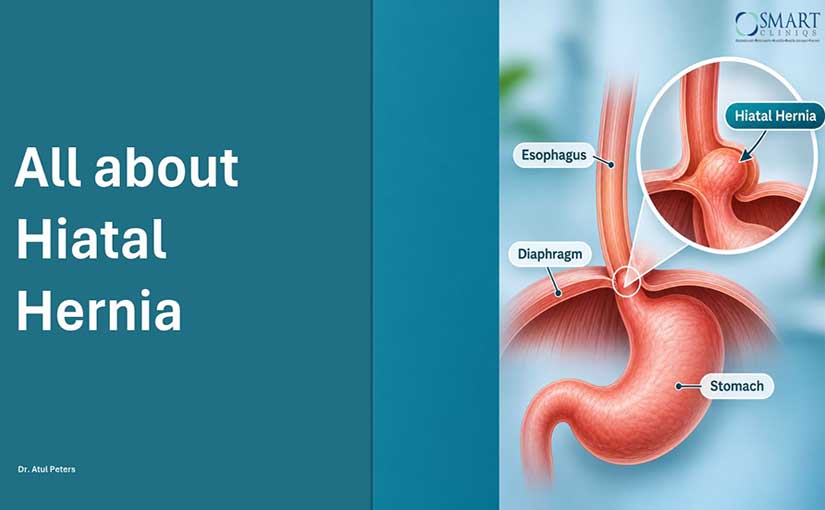
Your food pipe passes from the chest into the abdomen through a small opening in the diaphragm, the muscle that separates the two. This opening is called the hiatus. In a hiatal hernia, part of the stomach slides or pushes up through that opening into the chest.
Unlike a groin or umbilical hernia, it cannot be seen or pushed back by hand. If you are thinking of a hernia in the abdominal wall, see our page on hernia surgery in Delhi.
Types of hiatal hernia
- Sliding (type I): The junction of the food pipe and stomach moves up and down through the hiatus. This is by far the most common type, and many people have no symptoms.
- Paraesophageal (type II): The junction stays in place, but part of the stomach pushes up beside the food pipe. It is less common and more likely to cause problems.
- Mixed (type III): A combination of the two.
- Type IV: Other organs, such as the colon, also move into the chest. This is uncommon.
Causes and risk factors
The hiatus can widen or weaken with age. Pressure inside the abdomen adds to the strain. Common contributors include:
- Obesity
- Chronic coughing or long-term constipation and straining
- Heavy lifting
- Pregnancy
- Smoking
- Earlier surgery near the stomach or food pipe
Symptoms
Small sliding hernias often cause nothing at all. When symptoms appear, they include:
- Heartburn, especially after meals or when lying down
- Regurgitation of food or sour liquid
- Belching and bloating
- Feeling full quickly
- Difficulty or discomfort when swallowing
- Chest or upper abdominal discomfort
Large hernias, especially paraesophageal ones, may also cause breathlessness after meals, a sense of pressure in the chest, or low blood count from slow bleeding.
Chest pain can have a cardiac cause. If you have new chest pain, get it checked as a heart problem first.
When to get urgent help
Seek emergency care if you have sudden severe chest or abdominal pain, repeated vomiting with little coming up, or cannot swallow even liquids. These can mean the stomach has twisted or its blood supply is affected, which needs prompt treatment.
Hiatal hernia vs GERD
These two are often confused, but they are not the same.
- A hiatal hernia is a physical change in position of the stomach.
- GERD is a condition in which stomach acid flows back into the food pipe and causes symptoms.
A hiatal hernia can weaken the natural valve at the bottom of the food pipe and make reflux more likely. But many people with a hiatal hernia have no reflux, and many people with GERD have no hernia. Treatment depends on which problem is causing your symptoms. Read more in Reflux Reimagined.
How it is diagnosed
Your doctor may advise one or more of these:
- Upper GI endoscopy to look at the food pipe and stomach directly
- Barium swallow, an X-ray that shows the shape and position of the stomach
- Manometry and pH testing to measure how well the food pipe works and how much acid reflux occurs
Treatment without surgery
Most people with a sliding hernia and mild symptoms are treated without an operation. Measures include:
- Losing excess weight
- Eating smaller meals and finishing dinner two to three hours before lying down
- Raising the head of the bed
- Stopping smoking
- Medicines such as antacids or acid-reducing tablets, as prescribed
Medicines can control acid symptoms, but they do not repair the hernia.
When surgery is considered
Surgery may be advised if:
- You have a paraesophageal hernia that causes symptoms
- Reflux continues despite proper medical treatment, or you do not want long-term medicines
- The hernia is large and causes breathlessness, trouble swallowing or anaemia
- There are complications such as inflammation or narrowing of the food pipe
Guidelines from the Society of American Gastrointestinal and Endoscopic Surgeons advise repair for symptomatic paraesophageal hernias (Surgical Endoscopy, 2013). For small sliding hernias without symptoms, no operation is needed.
Hiatus hernia surgery in Delhi: what the operation involves
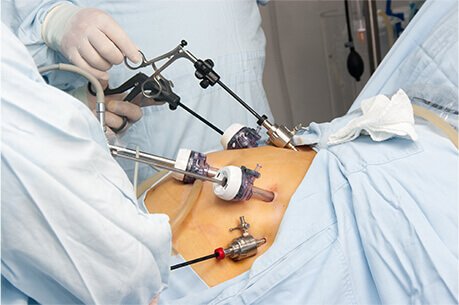
Hiatal hernia repair is usually done by keyhole or robotic-assisted surgery through small incisions. At Max Smart Super Speciality Hospital, Saket, Dr. Peters performs these procedures. The steps are:
- The stomach is gently brought back down into the abdomen.
- The hernia sac is removed.
- The widened opening in the diaphragm is closed with stitches, and a mesh is sometimes added for large defects.
- A fundoplication is often done, where the top of the stomach is wrapped around the lower food pipe to rebuild the valve against reflux.
You can read about this step on our fundoplication page and in GERD surgery in Delhi.
Recovery and risks
Most patients stay in hospital for a day or two. A soft diet is followed for the first few weeks, and swallowing may feel snug at first before settling. Many people return to desk work within about two weeks, though this varies.
Possible risks include bleeding, infection, temporary difficulty swallowing, bloating from trapped gas, and recurrence of the hernia over time. Injury to nearby organs is rare.
If you also have obesity
Obesity increases both reflux and the chance of a hiatal hernia returning. If you are considering weight loss surgery, the choice of operation matters, because a sleeve gastrectomy can worsen reflux in some people while gastric bypass often improves it. A hiatal hernia can sometimes be repaired during the same operation. See the weight loss surgery overview.
Frequently Asked Questions
Q. Is hiatal hernia the same as GERD?
A. No. A hiatal hernia is a change in the position of the stomach. GERD is acid reflux. One can lead to the other, but they can also occur separately.
Q. Can a hiatal hernia go away on its own?
A. No, it does not close by itself. Many small ones cause no trouble and need no treatment, while symptoms can be controlled with lifestyle changes and medicine.
Q. Do I always need surgery for a hiatal hernia?
A. No. Surgery is mainly for symptomatic paraesophageal hernias, reflux that does not respond to treatment, and larger hernias with complications.
The bottom line
A hiatal hernia is common, often silent and frequently managed without surgery. If you have ongoing heartburn, trouble swallowing or other symptoms, a proper assessment will show whether a hernia is the cause and which treatment suits you.